Rash with Fever: Causes, Ranked Diagnosis, and When It Is an Emergency
Medically Reviewed By
Dr. Marcus Chen, FAAD
Last Updated
February 28, 2026
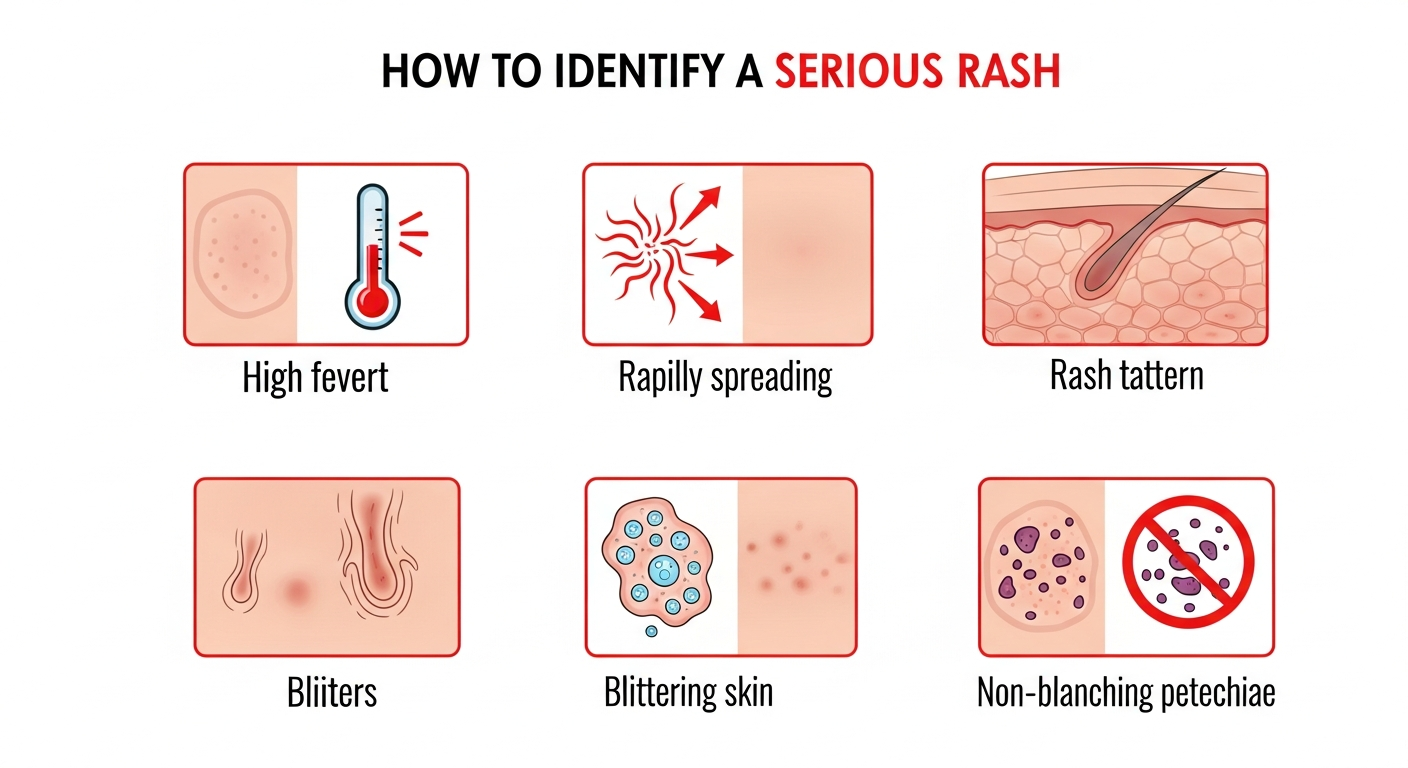
Rash with fever is one of the most important symptom combinations in medicine — it signals an active systemic process, and while the vast majority of cases are self-limiting viral infections, a small but critical subset are life-threatening emergencies where hours of delay can mean the difference between recovery and death. The single most important question when confronted with rash and fever is: does the rash blanch under pressure? A non-blanching rash with fever — particularly with neck stiffness, severe headache, or deteriorating consciousness — is meningococcal septicemia until proven otherwise and requires emergency services to be called immediately. Beyond this life-saving distinction, the differential diagnosis of rash with fever is broad: viral exanthems (roseola, fifth disease, measles, rubella, chickenpox, and dozens of enteroviruses), scarlet fever (streptococcal), Kawasaki disease (in young children), dengue fever, drug hypersensitivity reactions (morbilliform drug eruption, DRESS), and rickettsia (Rocky Mountain spotted fever, typhus). This guide provides a ranked diagnostic approach, the key differentiating features of each major cause, and clear guidance on which presentations require emergency care versus a GP appointment versus watchful waiting.
Quick Medical Summary
Possible Causes of Rash with Fever: Ranked by Frequency and Urgency
Viral exanthems (the most common cause): the vast majority of rash-with-fever presentations in children are benign viral infections producing a non-specific, pink, blanching, maculopapular rash on the trunk that spreads to the limbs — commonly called a 'viral rash.' Dozens of enteroviruses, adenoviruses, and other common respiratory viruses cause this pattern. No specific treatment is needed beyond antipyretics, fluids, and rest. The rash resolves with the viral illness. Specific named viral exanthems: roseola (HHV-6) — high fever first, then rash when fever breaks; fifth disease (parvovirus B19) — slapped-cheek rash, children no longer infectious when rash appears; measles — in unvaccinated individuals: cough, runny nose, red eyes (Koplik's spots on buccal mucosa) 2–3 days before the rash, then spreading maculopapular rash from head to toe; rubella — pink rash starting on face, spreading to trunk, lasting 3 days; chickenpox — vesicles in all stages, trunk spreading everywhere. Scarlet fever (Streptococcus pyogenes): high fever + sore throat + sandpaper-texture blanching rash starting on the neck and groin spreading across the body, with characteristic strawberry tongue and circumoral pallor (pale ring around the mouth). Requires antibiotic treatment (penicillin V for 10 days). Kawasaki disease (in children under 5): persistent fever for 5+ days PLUS at least 4 of: bilateral conjunctival injection, polymorphous rash, strawberry tongue or lip cracking, extremity changes (red swollen hands/feet, desquamation), or cervical lymphadenopathy. Requires urgent treatment with IVIG and aspirin to prevent coronary artery aneurysm. Drug hypersensitivity (DRESS): fever + widespread morbilliform rash + lymph node swelling + organ inflammation (liver, kidneys) beginning 2–8 weeks after starting a causative drug (allopurinol, carbamazepine, sulfonamides, vancomycin). Medical emergency requiring hospitalization and drug withdrawal.
How to Narrow Down the Diagnosis of Rash with Fever
The blanching test is the first and most important step: press a glass against the rash with firm pressure. If the rash blanches (turns white) → inflammatory (blood in vessels). If the rash does not blanch (remains visible) → blood outside vessels (petechiae/purpura — emergency). Age narrows the differential significantly. Under 2 years: roseola, viral exanthem, impetigo, Kawasaki disease. Ages 2–12: chickenpox, fifth disease, scarlet fever, hand-foot-mouth, Kawasaki (under 5). Adults: drug reactions, viral rash (less specific pattern), dengue (with travel history), secondary syphilis, Still's disease (adult-onset). Travel history: travel to tropical regions in the past 2 weeks + rash + fever → dengue, chikungunya, Zika, typhoid, or rickettsia must be actively excluded. Dengue produces severe bone pain ('breakbone fever'), retroorbital headache, and a blanching maculopapular rash. Rickettsia (Rocky Mountain spotted fever) → petechiae starting on wrists and ankles, spreading centrally — this is non-blanching and potentially fatal. Requires doxycycline treatment. The character of the rash: scarlatiniform (sandpaper texture, blanching) → scarlet fever; vesicular (blisters in all stages) → chickenpox; petechial/purpuric (non-blanching) → meningococcal, rickettsia, vasculitis — emergency; maculopapular (flat and raised spots) → viral exanthem, drug reaction, measles. Mucosal involvement: mouth ulcers/sores + fever + rash → hand-foot-mouth disease, Kawasaki disease, Stevens-Johnson Syndrome (blistering mucosal involvement → emergency). Koplik's spots (white spots on inner cheeks) → measles. Strawberry tongue + throat inflammation → scarlet fever or Kawasaki disease.
When Rash with Fever Is a Medical Emergency
Call emergency services (999/911) immediately for any of the following: Non-blanching rash (petechiae or purpura) with fever — particularly if accompanied by neck stiffness, severe headache, extreme lethargy, or sensitivity to light. This is meningococcal septicemia until proven otherwise. The meningococcal bacteria release endotoxins that cause catastrophic coagulation cascade activation, rapidly leading to multi-organ failure. Early IV antibiotics (ceftriaxone) are lifesaving — time to antibiotics is the single most important predictor of survival. A child with persistent fever for 5+ days who does not fit a typical viral illness pattern: Kawasaki disease, which is the leading cause of acquired heart disease in children in developed countries due to coronary artery inflammation and aneurysm formation. Fever + rash + blistering of lips, mouth, eyes, or genitals, 7–14 days after starting a new medication: Stevens-Johnson Syndrome (SJS) or toxic epidermal necrolysis (TEN). Stop all suspect medications, call emergency services. Fever + rash + extreme toxicity out of proportion to the appearance: septicemia from various bacteria, or toxic shock syndrome (from Staphylococcus or Streptococcus toxin). Fever + rash + confusion or altered mental state: possible viral encephalitis, bacterial meningitis, or DRESS with cerebral involvement. Any traveler returning from a malaria zone with fever and rash: life-threatening falciparum malaria may present with rash features — immediate malaria testing is required. Rocky Mountain spotted fever, though uncommon, has up to 20% mortality without prompt doxycycline treatment — consider in any tick-exposed patient with fever, headache, and non-blanching rash on the wrists.
Key Symptoms
- Blanching, maculopapular pink rash spreading from trunk to limbs with fever (viral exanthem)
- Sandpaper-texture blanching rash + sore throat + strawberry tongue (scarlet fever)
- High fever 3–5 days then rose rash when fever breaks (roseola)
- Slapped cheeks then lacy arm rash (fifth disease)
- Vesicles in all stages across body with mild fever (chickenpox)
- Persistent fever 5+ days in young child + rash + red eyes (Kawasaki disease — urgent)
- Non-blanching spots anywhere with fever + headache (meningococcal — emergency)
- Fever + rash + blistering lips/mouth after new drug (SJS — emergency)
Treatment Options
- Viral exanthem: supportive — antipyretics (paracetamol/ibuprofen), fluids, rest
- Scarlet fever: penicillin V 10 days; amoxicillin alternative; confirm strep throat
- Kawasaki disease: IVIG + aspirin — hospitalization required urgently
- Chickenpox: calamine lotion; antihistamines; aciclovir for high-risk groups
- Drug reactions (DRESS): stop causative drug; systemic steroids; hospitalization
- Dengue: supportive — hydration; avoid NSAIDs (bleeding risk); monitor platelets
- Meningococcal: emergency IV ceftriaxone — call emergency services do not delay
- SJS/TEN: stop all drugs; hospitalization in burns unit; supportive care
| Condition | Rash Blanches? | Key Clinical Feature | Action Required |
|---|---|---|---|
| Viral Exanthem | Yes | Maculopapular, trunk, coincides with fever | Supportive care; monitor |
| Scarlet Fever | Yes — sandpaper texture | Sore throat, strawberry tongue, circumoral pallor | Penicillin V 10 days |
| Chickenpox | Yes | Vesicles in all stages; crops over 3–7 days | Symptomatic; aciclovir for high-risk |
| Kawasaki Disease | Yes | Fever 5+ days; red eyes; swollen hands | URGENT — IVIG + aspirin in hospital |
| Meningococcal | NO — emergency | Non-blanching petechiae/purpura | EMERGENCY — 999/911 immediately |
| DRESS | Yes, initially | Fever + rash + organ symptoms + new drug | Stop drug; hospitalization |
Narrow Down Your Diagnosis Further
When to See a Doctor Immediately
- Difficulty breathing or swallowing
- Swelling of the face, lips, or tongue
- High fever or severe chills
- Rapid spreading over a large body surface area
- Extreme pain, dizziness, or confusion
Frequently Asked Questions
Disclaimer
The medical information provided in this article is for educational purposes only and should not replace professional medical advice, diagnosis, or treatment. Always consult with a board-certified dermatologist or primary care physician regarding any severe or persistent skin conditions.