When Should I Go to the ER for a Rash?
Medically Reviewed By
Dr. Marcus Chen, FAAD
Last Updated
February 8, 2026
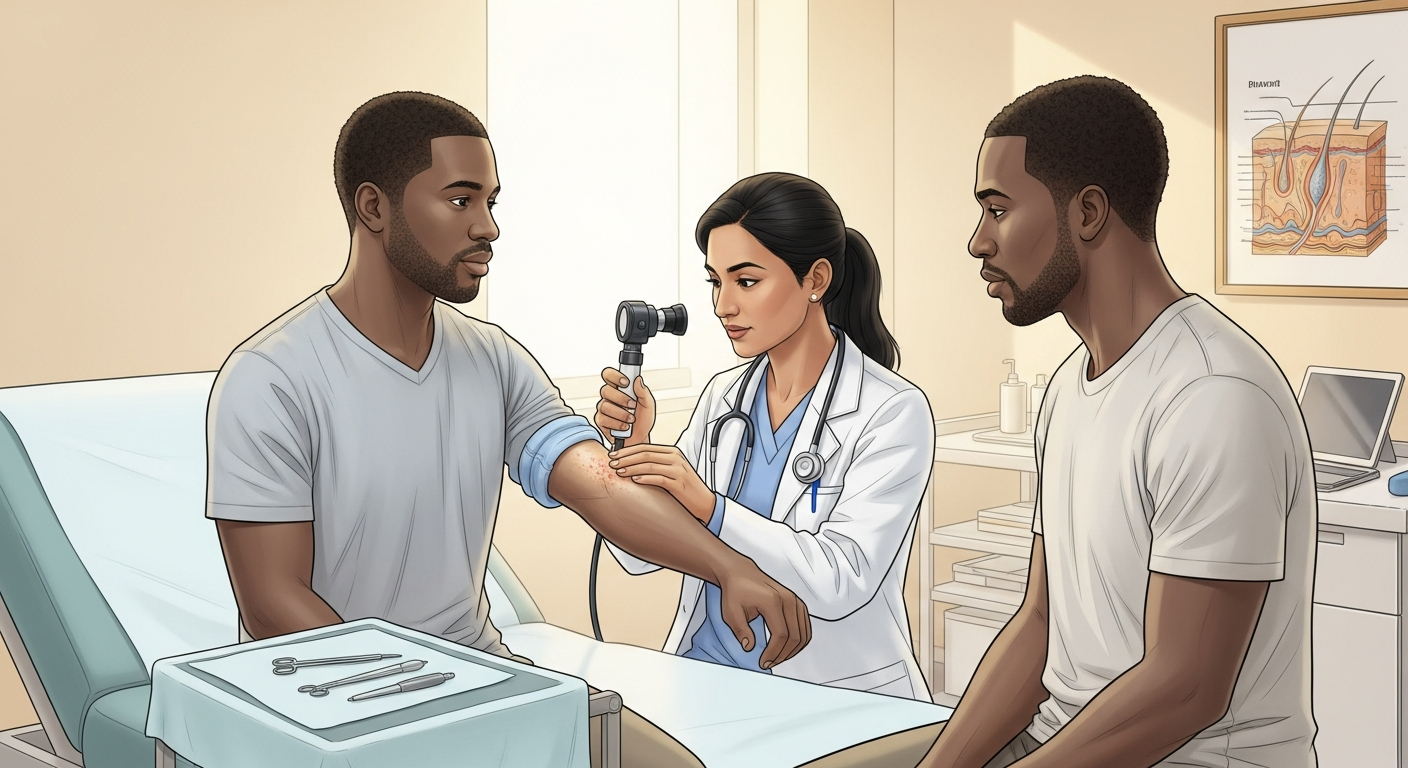
Go to the emergency room immediately if your rash meets any of these criteria: it does not turn white (blanch) when pressed with a glass or finger; it is accompanied by swelling of the throat, tongue, or lips; it is spreading rapidly across large areas of the body within hours; there is a high fever above 103°F (39.4°C) with the rash; the skin is blistering over large areas especially near the eyes or mouth; or the person is confused, cannot be roused, or has neck stiffness alongside the rash. These features indicate potentially life-threatening conditions: meningococcal septicemia, anaphylaxis, Stevens-Johnson Syndrome, toxic shock syndrome, or necrotizing fasciitis. In contrast, the vast majority of rashes — eczema, contact dermatitis, heat rash, hives without systemic symptoms, ringworm — can safely be managed at home or with a routine medical appointment.
Quick Medical Summary
Absolute Emergency: Call 911 Now
Certain rash presentations are absolute emergencies where calling 911 (or 999 in the UK) is the correct action — do not drive yourself to the hospital, do not wait to see if it gets better. Non-blanching rash: use the glass test — press a clear glass firmly against the rash. If the spots remain visible through the glass, this is non-blanching purpura. Call 911 immediately. This indicates meningococcal septicemia, vasculitis, or another condition causing vascular destruction that is rapidly lethal without treatment. This applies to children especially — a non-blanching rash in a child with fever is meningococcal disease until proven otherwise. Throat or tongue swelling with rash: swelling of the tongue, soft palate, or throat (stridor — a high-pitched breathing sound), difficulty swallowing, or a changed voice alongside a rash indicates anaphylaxis. The airway can close within minutes. If an EpiPen (epinephrine auto-injector) is available, administer it immediately into the outer thigh, then call 911. Do not wait to see if swallowing improves. Rapidly spreading rash with toxicity: a rash that visibly spreads across large areas within hours, accompanied by fever, confusion, or the patient looking very unwell, may indicate necrotizing fasciitis, meningococcemia, or toxic shock syndrome — all can be rapidly fatal.
Go to the ER Today: Urgent but Not Immediately Life-Threatening
The following situations warrant an emergency department visit the same day, even if they don't require calling 911. Fever above 103°F (39.4°C) with a new rash in a child under 12 or in an adult over 65 or who is immunocompromised. Any fever combined with a rash that is getting worse hour by hour. Rash beginning to blister over a significant area — even without mucosal involvement yet — as this may be the early phase of Stevens-Johnson Syndrome, which is time-sensitive to manage. Rash in a newborn (under 3 months) with any fever — neonates can deteriorate extremely rapidly from bacterial infections that cause skin involvement. Severe eye redness, discharge, or pain accompanying a rash — suggests potential ocular involvement in SJS or herpetic eye disease, both of which can cause blindness. Cellulitis (warm, expanding redness from a wound or bite) that has not responded to 48 hours of oral antibiotics, or that has red streaking extending upward (lymphangitis). Blistering rash in the distribution of a nerve root (one side of chest, face, or limb) with severe pain — shingles (herpes zoster), particularly involving the eye (herpes zoster ophthalmicus) or immunocompromised patients.
When to See a Doctor vs. Treat at Home
The majority of rashes do not require emergency care. Routine doctor appointments are appropriate for rashes that have not improved after 2 weeks of basic home treatment, for rashes with no identifiable cause, or for chronic recurring rashes needing formal diagnosis. Home treatment is safe for clearly identifiable, benign rashes: contact dermatitis from a known allergen — remove the allergen, apply hydrocortisone cream, cool compresses. Heat rash (miliaria) — cool environment, calamine lotion, cool shower. Simple hives without systemic symptoms — antihistamines, remove trigger, monitor for 4 hours. Minor sunburn — cool water, moisturizer, pain relief. Mild eczema flare in a patient with known eczema — apply prescribed topical steroid, emollient, antihistamines at night. Athlete's foot — over-the-counter antifungal cream twice daily for 4 weeks. The key decision point is: does the rash have any features suggesting a dangerous underlying cause (blanching test, systemic symptoms, rate of spread)? If yes, seek medical attention. If no, basic home care is appropriate with clear instructions to return if any warning signs develop.
Key Symptoms
- Non-blanching rash (stays visible under glass pressure) — call 911 immediately
- Any throat or tongue swelling alongside hives — call 911 immediately
- Rapid spread across body within hours with fever or confusion — call 911
- Large-area blistering, especially near eyes or mouth
- Fever >103°F in child with rash — go to ER today
- Cellulitis not improving on oral antibiotics after 48 hours — go to ER today
Treatment Options
- Non-blanching rash: call 911; antibiotics within 1 hour are lifesaving for meningococcal
- Anaphylaxis: epinephrine auto-injector immediately, then call 911
- SJS/TEN: stop all suspect medications; immediate hospital admission
- Shingles eye involvement: same-day ophthalmology and antiviral therapy
- Cellulitis failing antibiotics: IV antibiotics in hospital
- Benign rash at home: cool compresses, antihistamines, hydrocortisone 1% cream
When to See a Doctor Immediately
- Difficulty breathing or swallowing
- Swelling of the face, lips, or tongue
- High fever or severe chills
- Rapid spreading over a large body surface area
- Extreme pain, dizziness, or confusion
Frequently Asked Questions
Disclaimer
The medical information provided in this article is for educational purposes only and should not replace professional medical advice, diagnosis, or treatment. Always consult with a board-certified dermatologist or primary care physician regarding any severe or persistent skin conditions.