What Rash Spreads Quickly?
Medically Reviewed By
Dr. Marcus Chen, FAAD
Last Updated
December 8, 2025
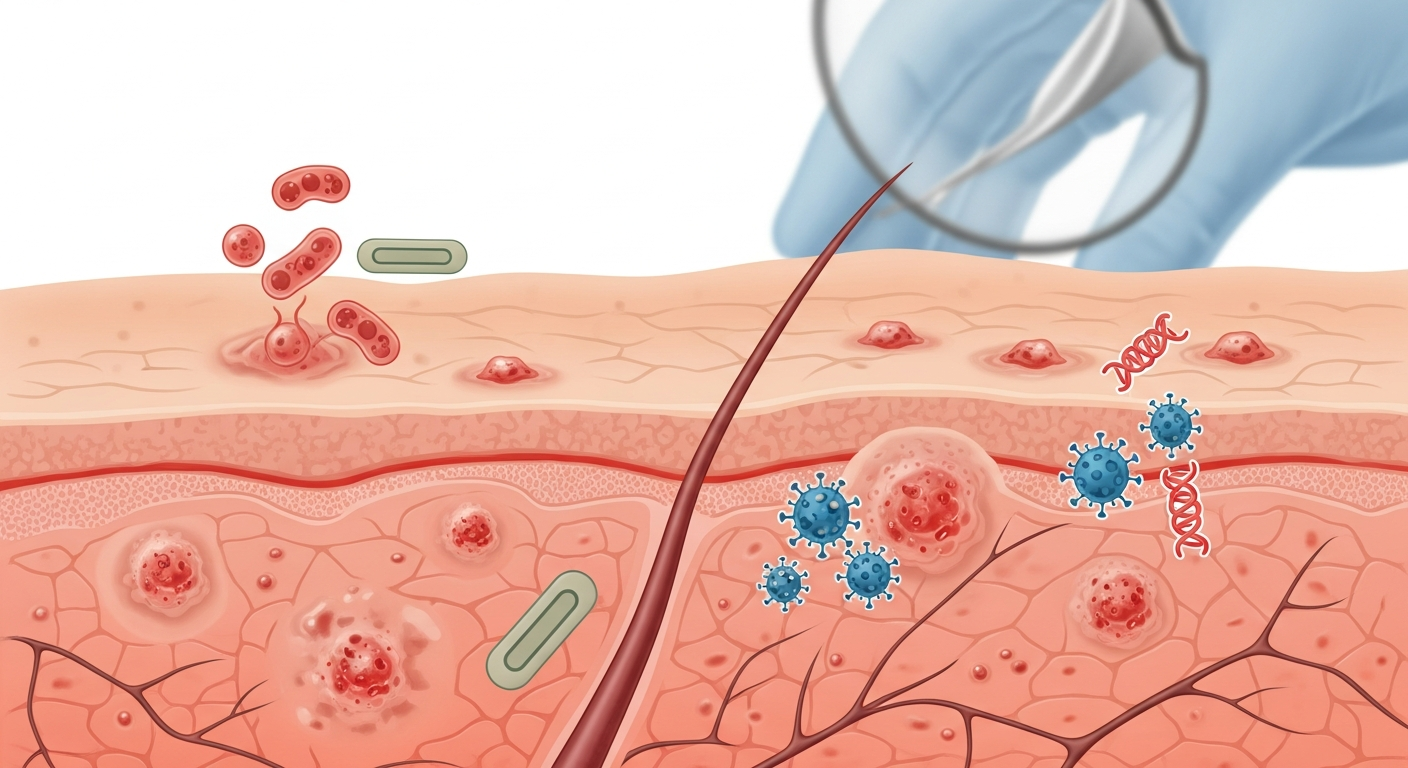
Several rash types are known for rapid spread, and the speed and pattern of that spread provide critical diagnostic clues. The most dangerous fast-spreading rash is meningococcal purpura — a non-blanching purple rash that can appear and spread across the entire body within hours, signaling a life-threatening bacterial infection requiring emergency care. Cellulitis — a bacterial skin infection — spreads in a characteristic expanding wave of redness, warmth, and swelling from a central entry point (a cut, insect bite, or crack in the skin). Contact dermatitis from systemic allergens or widespread exposures (like poison ivy on the hands transferring to the face and body) can appear to spread over 1–3 days. Hives (urticaria) are uniquely dynamic — individual lesions move and migrate across the body within 24-hour periods. Drug rashes commonly spread from the trunk outward over several days as the drug accumulates. Chickenpox spreads centrifugally from the trunk to face and limbs. Impetigo — a superficial bacterial infection common in children — spreads by autoinoculation when children touch sores and then other areas of skin.
Quick Medical Summary
Fastest-Spreading and Most Dangerous Rashes
The rash that spreads fastest and poses the greatest danger is meningococcal septicemia. Starting as small pink macules, it transforms into non-blanching petechiae and dark purple purpuric lesions within hours, rapidly covering large body areas. This rash is caused by Neisseria meningitidis bacteria releasing endotoxins that damage blood vessel walls. If you or someone near you develops small red or purple spots that do not blanch under pressure, accompanied by fever, severe headache, or stiff neck, this is a 999/911 emergency. Rocky Mountain Spotted Fever (RMSF), transmitted by tick bite, causes a petechial rash beginning on the wrists and ankles that spreads centrally to the trunk within 2–4 days of fever onset — also a medical emergency requiring immediate antibiotic treatment. Necrotizing fasciitis, while not a typical rash, causes rapidly spreading skin redness, swelling, and pain with underlying tissue destruction; it is an absolute surgical emergency. Severe drug reactions (Steven-Johnson Syndrome) spread from face and trunk outward over days, transitioning from flat spots to blisters with skin peeling — any blistering drug rash requires emergency evaluation.
Infectious Rashes That Spread Over Days
Cellulitis is among the most common rapidly-spreading infectious rashes. It originates from a bacterial entry point — a skin break from an insect bite, cut, crack between toes (from athlete's foot), or surgical wound — and spreads as a clearly defined, expanding border of redness (erythema), warmth, swelling, and tenderness. The expanding red border often advances visibly within 12–24 hours if untreated. Cellulitis requires oral or intravenous antibiotics; drawing a line around the border at first presentation helps monitor whether spreading continues. Impetigo — caused by Staph aureus or Streptococcus — starts as small blisters or honey-crusted sores around the nose and mouth in children, and spreads rapidly through touch to other skin areas and to other individuals. Chickenpox (varicella) begins on the trunk and scalp then spreads to the face and extremities over 3–5 days, producing successive crops of itchy blisters. Scabies mite infestation spreads by direct prolonged skin contact and can affect multiple household members simultaneously. Ringworm expands outward from the initial infection point over weeks as the fungus grows centrifugally, creating its characteristic ring shape.
Allergic and Inflammatory Rashes That Appear to Spread
Contact dermatitis from plants like poison ivy (Toxicodendron radicans) appears to spread dramatically, but is actually revealing areas of skin that received allergen at different concentrations — lighter exposures create delayed reactions appearing 12–72 hours after the initial eruption, giving the impression of spreading. Transfer of urushiol oil from hands to face, neck, and genitals creates new lesion sites that appear to be spreading. The fluid from blisters does not contain the allergen and cannot spread the rash — it is the allergen already in the skin causing delayed reactions. Hives (urticaria) have a unique pseudo-spreading pattern: individual wheals appear, migrate, and disappear within 24 hours — the rash seems to move across the body because new lesions replace fading ones. Systemic allergic reactions (anaphylaxis) cause sudden, widespread urticaria across large body areas within minutes of allergen exposure. Drug rashes (morbilliform drug eruptions) typically begin on the trunk and spread symmetrically to the extremities over 1–7 days, even after the offending drug is stopped, because the drug remains in tissues. If spreading drug rash develops blisters, mucosal involvement, or skin pain, seek emergency care for possible Stevens-Johnson Syndrome.
Key Symptoms
- Non-blanching purple spots spreading within hours (emergency: meningococcemia)
- Expanding red, warm, swollen border from a central wound or bite (cellulitis)
- Honey-crusted blisters spreading between facial areas or to other children (impetigo)
- Successive crops of blisters appearing on trunk then spreading to face and limbs (chickenpox)
- Migrating wheals that appear and disappear across the body within 24 hours (hives)
- Drug rash progressing from trunk outward with flat spots becoming blisters
Treatment Options
- Non-blanching spreading rash: call emergency services immediately
- Cellulitis: oral antibiotics (cephalexin, dicloxacillin) — IV if spreading rapidly
- Impetigo: topical mupirocin or oral antibiotics; strict hand hygiene
- Poison ivy: wash exposed skin immediately; hydrocortisone cream; oral antihistamines
- Hives: oral antihistamines; epinephrine if throat swells
- Drug rash: stop suspected medication; contact prescriber; emergency care if blistering
When to See a Doctor Immediately
- Difficulty breathing or swallowing
- Swelling of the face, lips, or tongue
- High fever or severe chills
- Rapid spreading over a large body surface area
- Extreme pain, dizziness, or confusion
Frequently Asked Questions
Disclaimer
The medical information provided in this article is for educational purposes only and should not replace professional medical advice, diagnosis, or treatment. Always consult with a board-certified dermatologist or primary care physician regarding any severe or persistent skin conditions.