What Does Contact Dermatitis Look Like?
Medically Reviewed By
Dr. Marcus Chen, FAAD
Last Updated
March 5, 2026
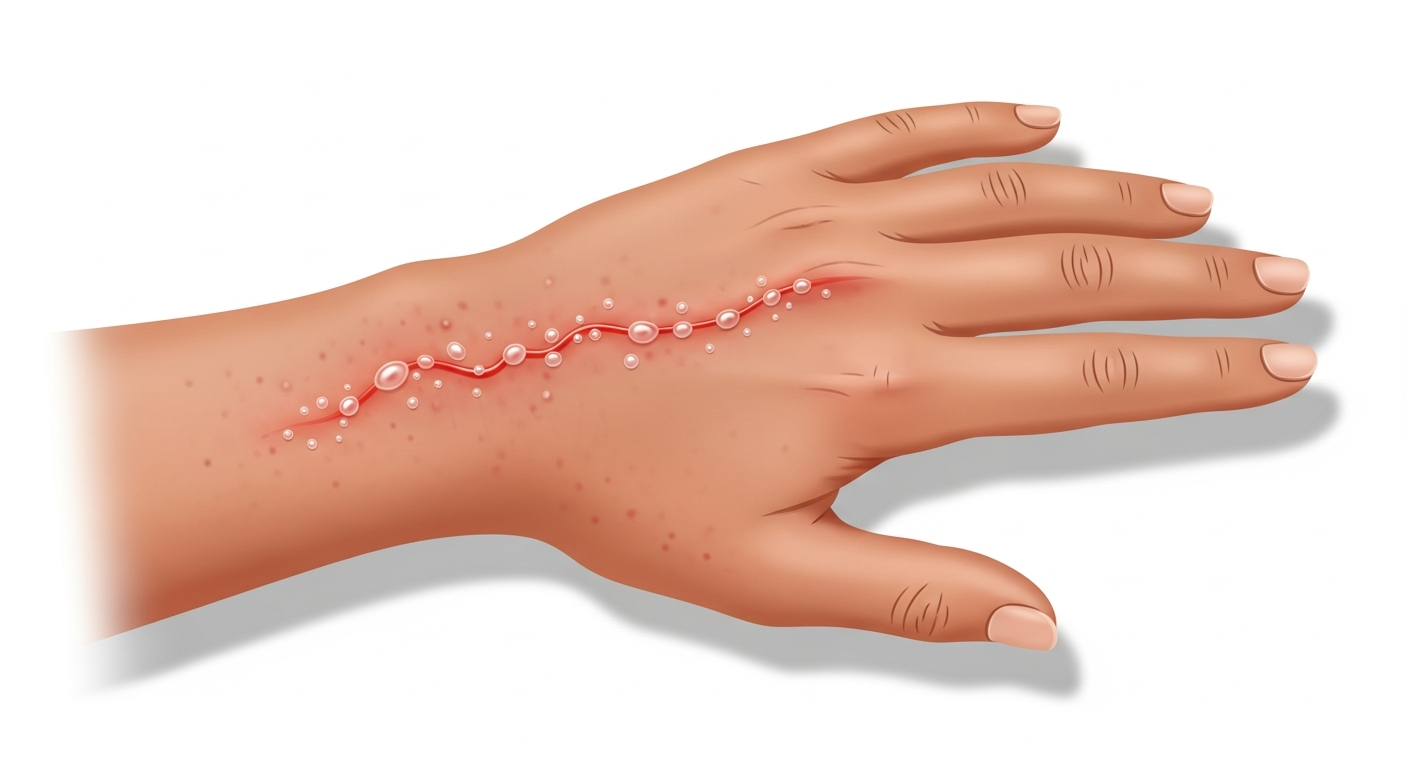
Contact dermatitis has a uniquely diagnostic appearance: the rash conforms precisely to the shape and location of whatever touched the skin. A rectangular rash on the wrist from a nickel watch buckle, a band of redness around the ankle from a rubber boot, or a streaky linear blister pattern from brushing against poison ivy are classic examples. There are two types with overlapping but distinct appearances: irritant contact dermatitis (ICD) and allergic contact dermatitis (ACD). Irritant contact dermatitis from harsh substances (soaps, acids, solvents) typically looks dry, red, chapped, and scaly — similar to windburn or severely chapped hands. Allergic contact dermatitis from allergens like nickel, poison ivy, or fragrance produces a more dramatically inflamed response: intense redness, swelling, and vesicles (blisters) that may weep. Both types cause intense itching. The shape-matching feature is the key to diagnosis — if the rash outline matches an object or exposure area exactly, contact dermatitis is the most likely diagnosis.
Quick Medical Summary
Appearance of Irritant Contact Dermatitis
Irritant contact dermatitis (ICD) results from direct chemical or physical damage to the skin — no prior sensitization is required, unlike allergic contact dermatitis. The appearance varies by severity: mild ICD from repeated, low-level irritant exposure (handwashing) causes dry, red, finely scaly skin with mild roughness and discomfort — resembling severely chapped skin. Moderate ICD from intermediate irritants (cleaning products, engine oils) causes more pronounced redness, mild swelling, and begins to develop fine cracks or fissures, particularly on finger knuckles and between fingers. Severe acute ICD from strong irritants (concentrated acids, alkalis, solvents) causes intense redness, swelling, and blistering within minutes to hours of exposure — the result of direct tissue destruction rather than inflammation. ICD from occlusion (wearing rubber gloves for hours) causes maceration — white, softened, wrinkled skin that breaks easily. In healthcare workers and hairdressers with chronic ICD, the hands develop deep, painful fissures (cracks) at the knuckle lines and fingertips, with callus-like thickening alternating with fragile cracked skin. The lack of blistering and the often symmetric distribution (both hands equally affected in glove-wearers) helps distinguish ICD from ACD.
Appearance of Allergic Contact Dermatitis
Allergic contact dermatitis (ACD) typically produces a more intensely inflammatory reaction than ICD, and the appearance depends on the allergen and the concentration of exposure. The classical poison ivy ACD presents as streaky, linear blisters in the pattern of plant brush contact — highly characteristic. The rash is intensely red, swollen, and studded with vesicles (small blisters) that weep a clear serous fluid. Over 1–3 days, as areas of skin that received lower concentrations of urushiol react, the rash appears to spread (but the fluid from the blisters is not contagious — it's the allergen already in the skin developing delayed reactions). Nickel ACD produces a rectangular or round rash exactly matching the shape of the nickel-containing object — a watch buckle on the wrist, a jean stud on the lower abdomen, a necklace clasp at the back of the neck, or earring studs on the earlobes. The rash is intensely itchy, with redness, tiny blisters, and sometimes crusting at the contact point. Fragrance ACD from perfume typically affects the neck and wrists (perfume application sites) and presents as a demarcated red, sometimes blistering rash in the areas directly sprayed. Rubber/latex ACD from medical gloves affects the dorsum of the hands in the precise glove-contact distribution — not the fingertips (which are typically affected by ICD).
When Contact Dermatitis Looks Different from Expected
Contact dermatitis doesn't always produce the classic shape-matching appearance, particularly in chronic cases and when the allergen is airborne or systemically delivered. Airborne contact dermatitis from volatile allergens (colophony in pine resin, formaldehyde from furniture, composite plant allergens) produces a widespread rash on exposed skin areas — face, neck, and forearms — without a clear contact shape. This can be confused with photodermatitis (sun-triggered), airborne viral rash, or rosacea. Photocontact dermatitis requires both the allergen and UV light simultaneously — common allergens include sunscreen chemicals (benzophenone), certain NSAIDs (ketoprofen gel), and plant phototoxins (psoralens in celery, parsnip, and giant hogweed). The rash appears on sun-exposed skin in geometric patterns matching sunlight exposure. Systemic contact dermatitis occurs when a person sensitized through skin contact is later exposed to the same allergen orally (certain foods, medications, or metals) — the rash appears systemically and may include hives, a morbilliform eruption, or the 'baboon syndrome' (intense redness in the groin and buttocks from systemic allergen distribution). Chronic contact dermatitis loses the distinctive shape-matching feature over time as the skin thickens, lichenifies, and spreads beyond the initial contact zone — at this stage it becomes difficult to distinguish from chronic eczema without patch testing.
Key Symptoms
- Rash in exact shape of contact object (watch, jewelry, elastic band, plant streaks)
- Intense itch, redness, and swelling at the contact site
- Blisters and weeping from allergic contact reactions (nickel, poison ivy)
- Dry, chapped, fissured skin from irritant contact (wet work, harsh soaps)
- Airborne-pattern rash on face and neck without direct contact history
- Rash appearing 24–72 hours after allergen contact (delayed hypersensitivity)
Treatment Options
- Remove the allergen or irritant immediately and wash the skin
- Topical corticosteroid cream (hydrocortisone 1% OTC; prescription for severe ACD)
- Cool compresses for weeping, blistering reactions
- Oral antihistamines for itch — particularly helpful at night
- Oral prednisone for severe, widespread poison ivy or other ACD reactions
- Patch testing to identify specific allergens for permanent avoidance
When to See a Doctor Immediately
- Difficulty breathing or swallowing
- Swelling of the face, lips, or tongue
- High fever or severe chills
- Rapid spreading over a large body surface area
- Extreme pain, dizziness, or confusion
Frequently Asked Questions
Disclaimer
The medical information provided in this article is for educational purposes only and should not replace professional medical advice, diagnosis, or treatment. Always consult with a board-certified dermatologist or primary care physician regarding any severe or persistent skin conditions.