What Does a Viral Rash Look Like?
Medically Reviewed By
Dr. Marcus Chen, FAAD
Last Updated
November 3, 2025
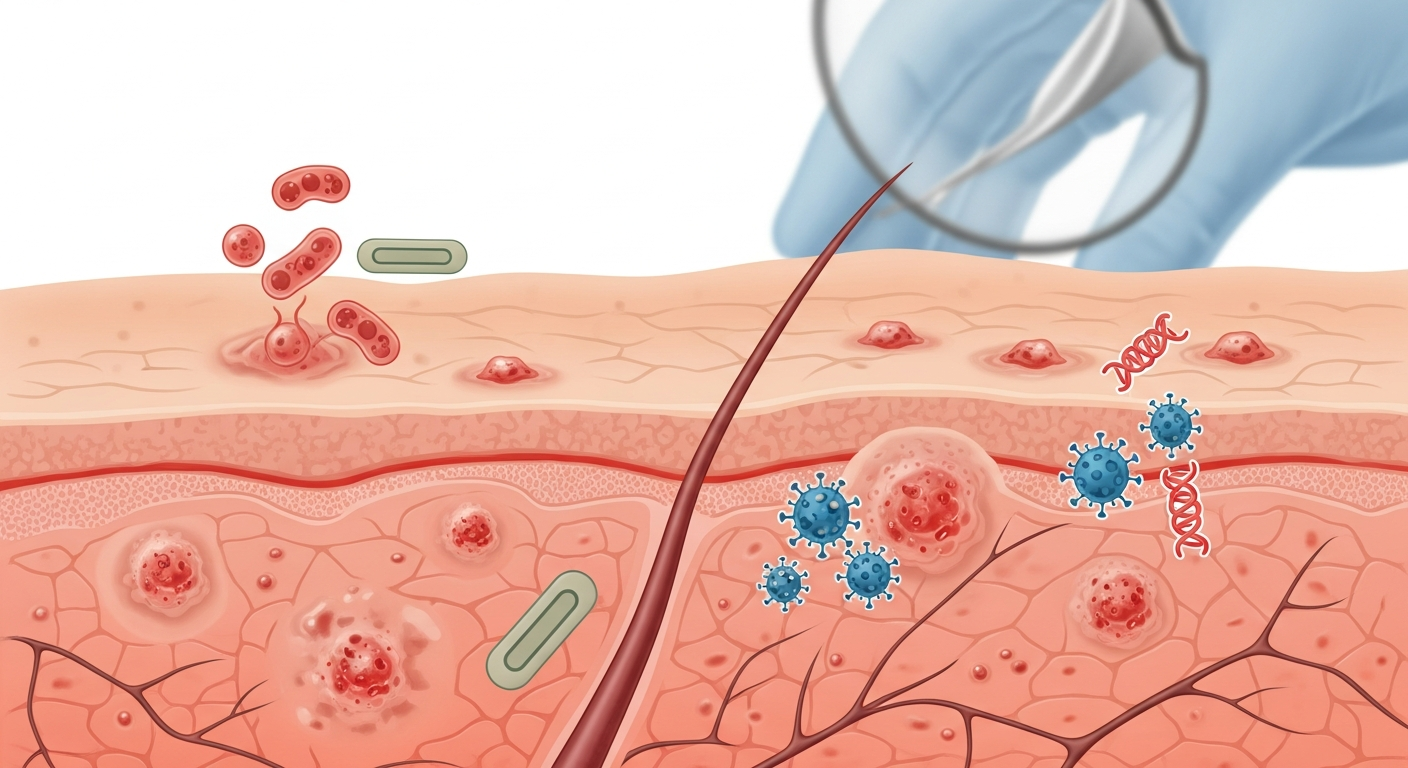
A viral rash — called a viral exanthem — typically appears as widespread, flat or slightly raised pink-to-red spots covering large areas of the trunk, back, and limbs simultaneously. Unlike bacterial rashes that often start in one localized area, viral rashes erupt quickly and symmetrically, frequently appearing first on the chest or back before spreading outward. The spots are usually 2–5mm in diameter, blanch (turn white) when pressed, and do not have the sharp borders or crusting seen in fungal infections. In most cases, viral rashes are accompanied by systemic symptoms: fever, fatigue, runny nose, or a sore throat that either precede or coincide with the skin eruption. Children are more frequently affected than adults. Common culprits include roseola (HHV-6), fifth disease (parvovirus B19), hand-foot-and-mouth disease (coxsackievirus), and rubella. While most viral rashes resolve without treatment within 7–14 days, a petechial (pinpoint, non-blanching) viral rash requires urgent evaluation.
Quick Medical Summary
Color and Texture of a Viral Rash
Most viral rashes present as a morbilliform (measles-like) eruption — diffuse, pink-to-red macules (flat spots) and papules (slightly raised bumps) that merge together in places. The color ranges from pale pink in the early stages to a deeper red at peak intensity. On darker skin tones, the redness may be less obvious; look instead for areas of raised texture, warmth, and mild swelling. Roseola produces a distinctive rose-pink rash that appears only after the high fever breaks, making it one of the few rashes that develops after fever resolution rather than during it. Fifth disease (slapped cheek disease) causes an intensely red facial rash that looks like the child has been slapped, followed by a lacy, net-like rash on the arms and thighs. Hand-foot-and-mouth disease produces small, painful blisters inside the mouth and flat-topped papules or vesicles on the palms and soles — a highly specific distribution. Chickenpox (varicella) is a notable exception: it causes intensely itchy fluid-filled blisters (vesicles) in different stages of healing simultaneously, giving the classic 'dewdrop on a rose petal' appearance.
Pattern and Distribution on the Body
The distribution of a viral rash is one of its most diagnostically important features. Most viral exanthems begin centrally — on the trunk — and spread centrifugally toward the face, arms, and legs. This centrifugal spread pattern distinguishes viral rashes from contact dermatitis, which follows the exact shape of allergen exposure. Rocky Mountain Spotted Fever (a tick-borne bacterial infection sometimes confused for viral) is an important exception: its petechial rash classically begins on the wrists and ankles and spreads centrally — centripetal spread. The overall pattern is typically bilateral and symmetrical. Rubella causes a fine, pink macular rash starting on the face that spreads downward to the neck, trunk, and extremities over three days, clearing in the same downward order. Measles produces a similar pattern but with larger, blotchier lesions that may coalesce into large red sheets. Viral rashes in children associated with enterovirus (coxsackievirus and echovirus) are often most prominent on the buttocks and thighs, which is diagnostically useful for distinguishing them from other eruptions.
How to Distinguish a Viral Rash from Other Types
The key diagnostic clues for a viral rash are: (1) systemic illness symptoms accompanying or preceding the rash, (2) rapid, widespread, symmetrical distribution across large body areas, (3) blanching when pressed (indicating the redness is from blood vessel dilation, not hemorrhage), and (4) resolution within 7–14 days without antibiotic therapy. A bacterial rash — such as the cellulitis border around an infected wound or the sandpaper-textured scarlet fever rash — typically has a clear local source, spreads outward from one site, and responds to antibiotics. An allergic rash (urticaria/hives) forms raised, intensely itchy wheals that migrate — individual lesions appear and disappear within 24 hours — and has no fever. A fungal rash like ringworm has a very distinct ring shape with a scaly, raised active outer border and a clearing center. Drug rashes — often morbilliform and widespread — appear 7–14 days after starting a new medication and resolve once the drug is stopped. If the viral rash becomes non-blanching (petechiae or purpura), seek emergency care immediately — this can indicate meningococcal disease or vasculitis.
Key Symptoms
- Widespread flat or raised pink-to-red spots, often starting on the trunk
- Symmetrical distribution spreading from center outward to limbs
- Accompanies fever, fatigue, sore throat, or runny nose
- Blanches white when pressed firmly with a finger
- Resolves spontaneously within 7–14 days without antibiotics
- Non-blanching (petechial) spots signal a medical emergency
Treatment Options
- Rest and supportive care — most viral rashes resolve on their own
- Oral antihistamines (cetirizine, loratadine) to reduce itching
- Cool compresses and lukewarm baths for comfort
- Acetaminophen or ibuprofen for fever (avoid aspirin in children)
- Calamine lotion for chickenpox-associated itching
- See a doctor immediately for non-blanching rash, breathing difficulty, or rapidly spreading rash
When to See a Doctor Immediately
- Difficulty breathing or swallowing
- Swelling of the face, lips, or tongue
- High fever or severe chills
- Rapid spreading over a large body surface area
- Extreme pain, dizziness, or confusion
Frequently Asked Questions
Disclaimer
The medical information provided in this article is for educational purposes only and should not replace professional medical advice, diagnosis, or treatment. Always consult with a board-certified dermatologist or primary care physician regarding any severe or persistent skin conditions.