What Causes a Rash on the Legs?
Medically Reviewed By
Dr. Marcus Chen, FAAD
Last Updated
December 29, 2025
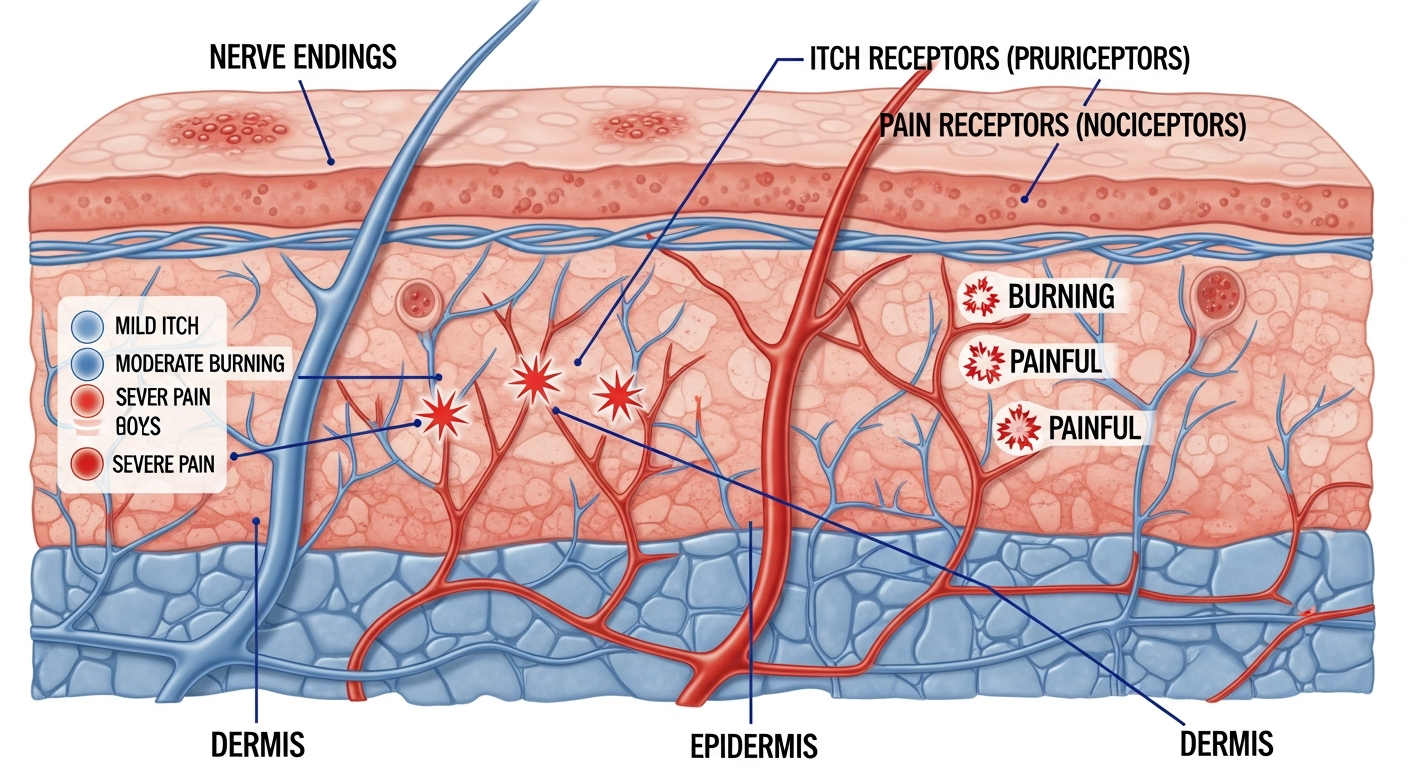
Rashes on the legs are extremely common and have a wide range of causes — from benign folliculitis (razor bumps) to medically significant conditions like venous eczema (varicose eczema) and erythema nodosum (painful red nodules signaling systemic disease). The precise location on the leg (inner thigh, shin, calf, ankle, behind the knee, foot) provides important diagnostic clues. Shin and ankle rashes are classic locations for venous eczema and stasis dermatitis in people with varicose veins or poor circulation. Behind-the-knee rashes in children almost always signal atopic eczema. The outer shins and calves are common sites for erythema nodosum, a condition of inflammation in the fat layer beneath the skin. Inner thigh and groin rashes suggest tinea cruris (jock itch), intertrigo (chafing-related yeast rash), or contact dermatitis from clothing dye or elastic waistbands. Understanding these anatomical patterns guides effective treatment.
Quick Medical Summary
Common Causes by Location on the Leg
Lower legs and ankles — particularly in people over 50 or those with varicose veins — are a classical site for venous (stasis) eczema. The chronic venous hypertension from poorly functioning leg vein valves causes fluid to leak into the surrounding skin, producing redness, scaling, itching, and progressive skin changes (hemosiderin staining — a rusty-brown discoloration from leakage of red blood cell breakdown products). Venous eczema can progress to lipodermatosclerosis (skin hardening) and venous ulcers if underlying venous insufficiency is not treated. Behind the knees (popliteal fossae) in children and young adults is the characteristic location of atopic eczema flexural involvement — itchy, scaly, sometimes weeping patches that thicken with chronic scratching. On the outer shins and calves, two important conditions appear: erythema nodosum — tender, red, deep nodules (not a surface rash) — and lichen planus — flat-topped, shiny purple papules that characteristically affect the ankles and wrists. Both require systemic workup for underlying causes. Lower legs in athletes commonly develop folliculitis — infected hair follicles appearing as pus-filled red papules, typically after shaving — and tinea pedis extending from the feet onto the lower legs.
Causes Affecting the Whole Leg or Multiple Sites
Contact dermatitis from elastic in socks, tights, or leggings can produce band-like rash around the ankle or calf corresponding exactly to the elastic contact area — a diagnostically specific pattern. Grass, plant, and outdoor allergen contact dermatitis causes widespread lower leg rash in people who garden or walk barefoot in grass. Tinea corporis (ringworm) on the legs produces the classic scaly ring pattern and is commonly contracted from pets (Microsporum canis from cats and dogs) or shared exercise equipment. Drug rashes commonly affect the legs as part of widespread symmetric drug eruption. Psoriasis on the legs typically appears as well-defined, thick, silver-scaled plaques on the knees and shins — often more prominent and treatment-resistant on the legs than other body areas. Lichen simplex chronicus — chronic thickened, hyperpigmented skin from habitual scratching — develops on the outer ankle, calf, and inner thigh as a result of any itchy condition maintained by the scratch cycle. Cutaneous small vessel vasculitis causes a palpable purpuric rash (raised, non-blanching purple dots and patches) predominantly on the lower legs and ankles, often associated with systemic illness, infection, or medication.
When Leg Rash Signals a Systemic Condition
Some leg rashes are cutaneous signs of internal disease requiring systemic evaluation. Erythema nodosum — painful, deep-red or violet nodules (not patches) on the shins — is a reactive condition indicating an underlying trigger: streptococcal throat infection, inflammatory bowel disease (Crohn's or ulcerative colitis), sarcoidosis, tuberculosis, pregnancy, or medications (sulfonamides, oral contraceptives). A chest X-ray, throat swab, and blood tests should accompany any erythema nodosum diagnosis. Pyoderma gangrenosum begins as a painful nodule or pustule on the leg that ulcerates rapidly, with a violaceous (purple-edged) undermined border — it is associated with inflammatory bowel disease, rheumatoid arthritis, and haematological malignancies. Diabetic dermopathy — light brown, oval, slightly depressed patches on the shins (shin spots) — is the most common skin finding in diabetes, caused by microangiopathy. Necrobiosis lipoidica diabeticorum produces yellowish-brown, waxy plaques on the shins with visible underlying blood vessels (telangiectasia). Livedo reticularis — a mottled, net-like purplish rash on the legs — can indicate vasculitis, antiphospholipid syndrome, or idiopathic benign livedo. Gravity-dependent purpura in elderly individuals (gravitational purpura) causes non-blanching purple spots on the lower legs from capillary fragility — benign but sometimes concerning cosmetically.
Key Symptoms
- Rusty-brown discoloration with scaling on inner ankle/shin (venous eczema)
- Itchy, scaly rash behind the knees in children and young adults (atopic eczema)
- Tender red deep nodules on shins (erythema nodosum — systemic workup needed)
- Flat-topped shiny purple papules on ankles and wrists (lichen planus)
- Band-like rash matching exact elastic or fabric contact (contact dermatitis)
- Non-blanching palpable purple dots on lower legs (vasculitis)
Treatment Options
- Venous eczema: compression stockings (most important), topical steroids, moisturizers
- Atopic eczema: topical steroids, calcineurin inhibitors, emollients, trigger avoidance
- Erythema nodosum: treat underlying cause; NSAIDs for pain; rest, leg elevation
- Contact dermatitis: identify and remove allergen; topical steroids, antihistamines
- Tinea: topical antifungal for 4 weeks; oral for widespread infection
- Vasculitic rash: urgent rheumatology/dermatology evaluation for systemic workup
When to See a Doctor Immediately
- Difficulty breathing or swallowing
- Swelling of the face, lips, or tongue
- High fever or severe chills
- Rapid spreading over a large body surface area
- Extreme pain, dizziness, or confusion
Frequently Asked Questions
Disclaimer
The medical information provided in this article is for educational purposes only and should not replace professional medical advice, diagnosis, or treatment. Always consult with a board-certified dermatologist or primary care physician regarding any severe or persistent skin conditions.