Rash vs. Allergy: What's the Difference?
Medically Reviewed By
Dr. Marcus Chen, FAAD
Last Updated
January 31, 2026
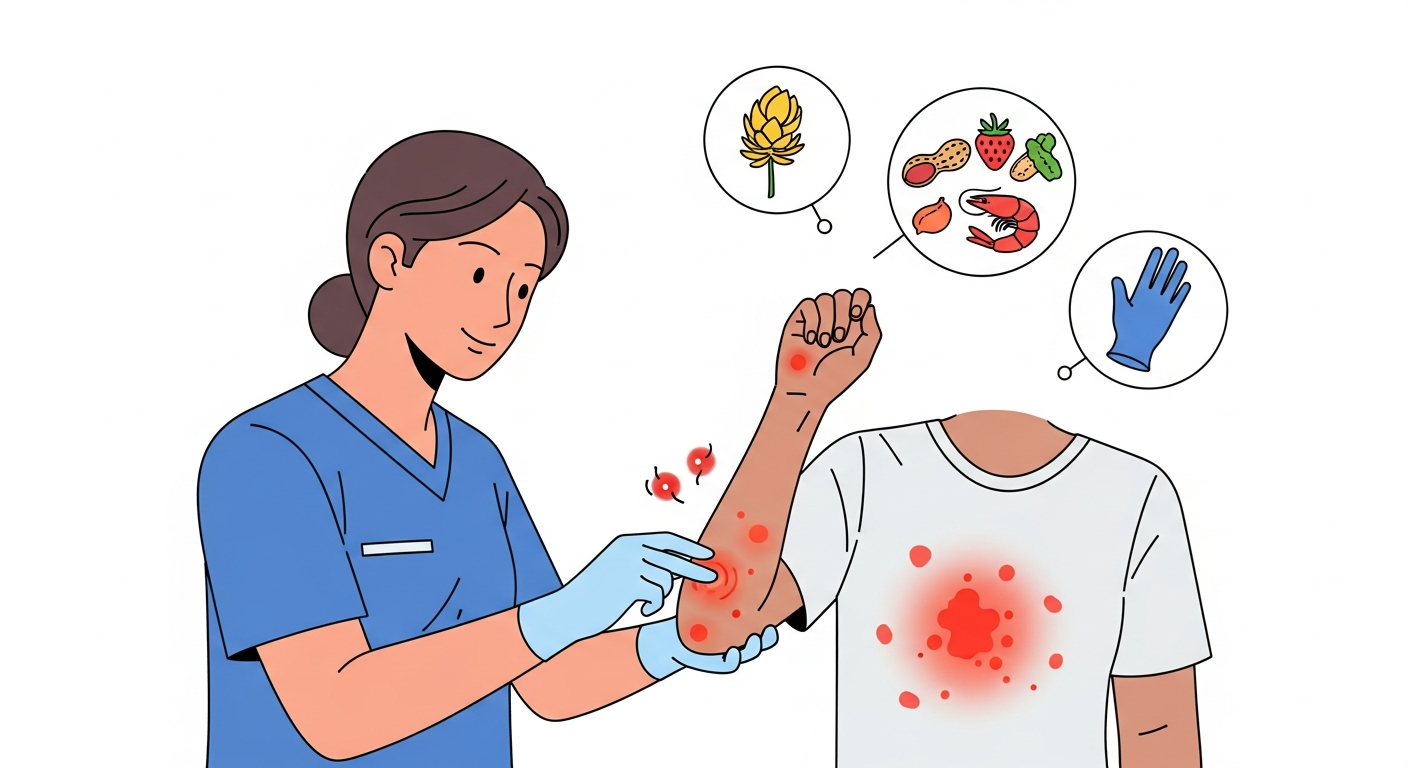
A rash is any change in the skin's color, texture, or appearance — it is a symptom, not a diagnosis. An allergy is an overreaction of the immune system to a normally harmless substance (allergen). Allergic reactions can cause rashes, but most rashes are not allergic in origin. The difference matters enormously for treatment: an antihistamine is highly effective for allergic hives but useless for a fungal rash or bacterial cellulitis. Allergic rashes include IgE-mediated hives (urticaria), contact dermatitis from direct skin contact with allergens, atopic dermatitis (eczema) driven by environmental and food sensitization, and anaphylaxis involving systemic skin involvement. Non-allergic rashes include infections (bacterial, viral, fungal), heat rash, pressure rash, drug toxicity reactions (not immune-mediated), autoimmune rashes (lupus, psoriasis), seborrheic dermatitis, and rosacea. Accurate identification requires evaluating the onset, pattern, triggers, associated symptoms, and response to treatment.
Quick Medical Summary
How to Recognize a Truly Allergic Rash
Allergic rashes arise when the immune system generates an IgE antibody response to an allergen — a process called sensitization. On re-exposure, IgE antibodies on mast cells bind the allergen, triggering release of histamine, leukotrienes, and cytokines that produce the skin response. IgE-mediated urticaria (hives) is the classic allergic rash: raised, intensely itchy wheals that appear within 15–30 minutes of allergen exposure, can occur anywhere on the body, and characteristically fade within 24 hours while new lesions appear elsewhere (migratory). Common triggers include food allergens (peanuts, shellfish, tree nuts, dairy, eggs), insect venom, latex, and medications (penicillin, NSAIDs). Contact dermatitis is a Type IV (delayed) hypersensitivity reaction — T-cell mediated, not IgE — producing redness, blistering, and weeping rash at the exact site of allergen contact, typically 24–72 hours after exposure. Atopic dermatitis (eczema) involves complex IgE sensitization plus barrier defects and is associated with asthma and allergic rhinitis in the same patient ('atopic triad'). The strongest indicators of an allergic rash are: (1) rapid onset, (2) identifiable trigger, (3) itching as the primary symptom, (4) response to antihistamines or corticosteroids, (5) absence of fever.
Non-Allergic Rashes That Are Commonly Mistaken for Allergies
Viral exanthems are frequently misdiagnosed as drug allergies or food allergies, especially in children who develop a rash while on antibiotics for an infection. In most cases, the rash is caused by the virus, not the antibiotic — a clinically important distinction because wrongly labeling a patient as penicillin-allergic has significant downstream consequences for antibiotic stewardship. Heat rash (miliaria) appears suddenly in hot, humid conditions as tiny red bumps in skin folds — no allergen is involved; the cause is sweat gland blockage. Seborrheic dermatitis — scaly, flaking rash on the scalp, eyebrows, nose, and chest — is caused by an overgrowth of Malassezia yeast combined with an inflammatory skin response, not an allergy. Psoriasis involves T-cell-mediated autoimmunity attacking keratinocytes, producing thick plaques; it is not allergic. Rosacea is a vascular and inflammatory condition affecting the face, triggered by heat, spicy food, and alcohol; it mimics allergic facial redness but antihistamines provide no benefit. Drug toxicity reactions (photosensitivity, fixed drug eruption) occur through non-immunological mechanisms and do not respond to antihistamines.
When to Test for Allergies After a Rash
Allergy testing is indicated when: a rash consistently appears in relation to specific foods, environments, or substances; when anaphylaxis has occurred; when eczema is severe and not controlled with standard therapy; or when contact dermatitis has no obvious cause. Skin prick testing (SPT) is the standard initial test for IgE-mediated food and environmental allergies — a tiny amount of allergen extract is pricked into the forearm skin, and a positive 'wheal and flare' response at 15 minutes indicates sensitization. Serum specific IgE testing (ImmunoCAP) is a blood test that measures IgE levels against specific allergens — useful when SPT is not possible (severe eczema, dermographism, or antihistamine use). Patch testing is the gold standard for contact dermatitis — 30–80 standardized allergens are applied to the back under adhesive tape for 48 hours, then read at 48 and 96 hours. Patch testing identifies the specific allergen causing delayed hypersensitivity contact dermatitis, enabling avoidance. Elimination diets under dietitian supervision are used to identify food-triggered eczema, where skin prick testing may be less definitive.
Key Symptoms
- Allergic rash: itchy wheals (hives) appearing within 30 minutes of allergen exposure
- Contact dermatitis: blistering rash in the exact shape of allergen contact, 24–72 hours later
- Eczema: intensely itchy rash in skin folds, associated with asthma/hay fever
- Non-allergic rash: fever present (suggests infection, not allergy)
- Non-allergic: rash unresponsive to antihistamines after 48 hours
- Anaphylaxis: hives + throat swelling + breathing difficulty = emergency
Treatment Options
- Allergic hives: oral antihistamines (cetirizine, loratadine, fexofenadine)
- Anaphylaxis: epinephrine auto-injector immediately, then emergency services
- Contact dermatitis: remove allergen, hydrocortisone cream, cool compresses
- Eczema: moisturizers, topical steroids, allergy avoidance identified via patch testing
- Non-allergic rash: identify and treat underlying cause (infection, heat, etc.)
- Allergy specialist referral for recurring unclear rashes or documented anaphylaxis
When to See a Doctor Immediately
- Difficulty breathing or swallowing
- Swelling of the face, lips, or tongue
- High fever or severe chills
- Rapid spreading over a large body surface area
- Extreme pain, dizziness, or confusion
Frequently Asked Questions
Disclaimer
The medical information provided in this article is for educational purposes only and should not replace professional medical advice, diagnosis, or treatment. Always consult with a board-certified dermatologist or primary care physician regarding any severe or persistent skin conditions.