How to Stop a Rash from Spreading
Medically Reviewed By
Dr. Marcus Chen, FAAD
Last Updated
October 21, 2025
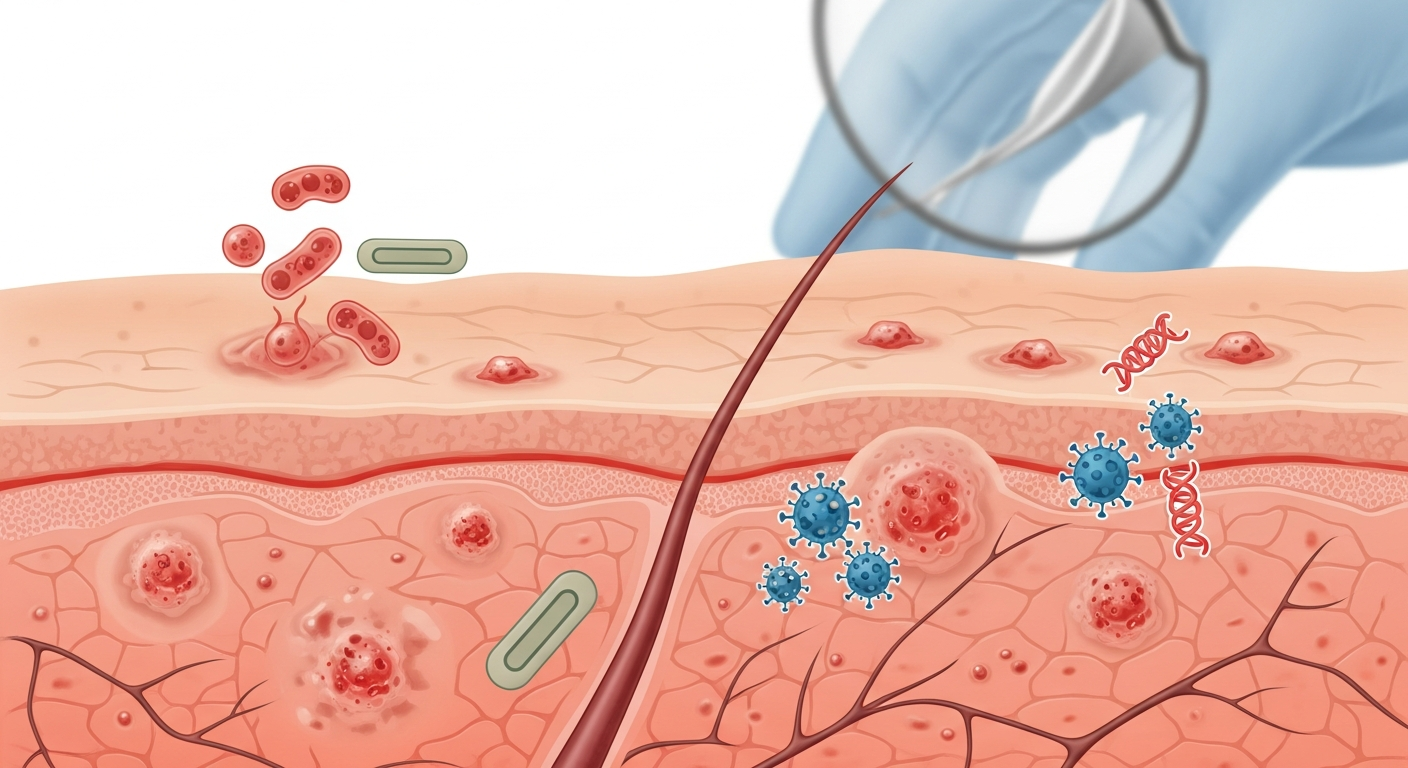
Stopping a rash from spreading depends entirely on identifying its cause — the strategy for containing contact dermatitis is completely different from containing impetigo or ringworm. For contact dermatitis, remove the allergen or irritant source and wash the exposed skin thoroughly to prevent further exposure. For infectious rashes (impetigo, ringworm, scabies), strict hand hygiene, avoiding skin-to-skin contact, and targeted antimicrobial treatment are the keys. For inflammatory rashes (eczema, hives), reducing the trigger — allergen, stress, heat — halts the spread. The most common mistake people make is scratching, which spreads impetigo and ringworm by direct autoinoculation, breaks the skin barrier allowing new allergen penetration in eczema, and introduces staphylococcal bacteria from under fingernails into open skin. Cutting fingernails short, wearing cotton gloves at night, and applying barrier cream to the rash borders are practical immediate measures for multiple rash types.
Quick Medical Summary
Stop Spreading: Contact Dermatitis and Allergic Rashes
For poison ivy (urushiol) contact dermatitis, the key to preventing spread is recognizing that the oil (urushiol) remains active on clothing, tools, and pet fur for months. Wash everything that may have touched the plant — clothing, gloves, shoes, garden tools — with soap and water or isopropyl alcohol immediately. Wash exposed skin with soap and cool water within 15 minutes of contact to remove urushiol before it penetrates. Contrary to popular belief, the blister fluid itself does not spread the rash — it is the urushiol already in the skin at different concentrations that causes the staggered appearance of new blisters over 2–3 days. For nickel, rubber, or cosmetic contact dermatitis, identify and remove all sources of the allergen: check jewelry, belt buckles, watch straps, and product ingredient labels. Without allergen removal, the rash will continue to develop in all areas of ongoing contact despite topical treatment. For hives, avoid the trigger food, drug, or substance; antihistamines prevent new hive formation but require the trigger to be absent to be fully effective.
Stop Spreading: Infectious Rashes
Impetigo — a highly contagious superficial bacterial skin infection — spreads rapidly by autoinoculation (touching sores then touching unaffected skin) and direct contact. Stop the spread: cover all lesions with non-stick dressings, wash hands thoroughly after any contact with the rash, use separate towels and pillowcases for the affected person, and avoid school or work until lesions are crusted over or 24 hours after starting antibiotics. Topical mupirocin or prescription antibiotics clear the active infection, stopping new lesion formation within 48–72 hours. Ringworm (tinea) spreads by contact with contaminated surfaces and direct skin contact. Treat all active patches with topical antifungal cream (clotrimazole, terbinafine) twice daily for the full 4-week course — stopping early because it 'looks better' is the leading cause of ringworm recurrence and spread. Wash bedding and clothing regularly; avoid sharing towels, brushes, or sports equipment. Scabies spreads by prolonged (at least 10 minutes) direct skin contact. Stop the spread by treating all household contacts simultaneously — even if only one person is symptomatic, all cohabitants must apply permethrin 5% cream and wash all bedding at 60°C on the same day. If only the symptomatic person is treated, re-infestation from untreated contacts is inevitable.
Protective Barriers and Long-Term Prevention
Applying a physical barrier around the edges of a rash — particularly for eczema and contact dermatitis — helps define boundaries and protect normal surrounding skin. Zinc oxide paste or plain petroleum jelly applied around (not inside) the active rash creates a protective coating that repels moisture and irritants and marks a visual boundary to monitor whether the rash is spreading. Scratch prevention is fundamental for any rash at risk of spreading: keep nails trimmed short (bacteria accumulate under nails), apply cotton gloves over emollient at night for eczema, and use distraction techniques when the urge to scratch becomes overwhelming. Wet wrap therapy — applying a layer of damp cotton bandaging over emollient-covered eczema at night — dramatically reduces scratching, increases emollient penetration, and is effective for both acute flares and preventing spread in children. For fungal rashes in heat-prone areas (groin, armpits, between toes), keep the area dry: use moisture-wicking underwear, apply antifungal powder (tolnaftate or miconazole powder) after drying, and change damp clothing promptly after exercise. Bleach baths (0.005% sodium hypochlorite — 1 teaspoon of household bleach per gallon of water) twice weekly reduce skin bacterial load in recurrent impetigo and eczema, significantly reducing the frequency of new lesion formation and spreading.
Key Symptoms
- Rash actively enlarging or new lesions appearing in adjacent areas
- Scratch marks (excoriations) at the rash margins from nocturnal scratching
- Rash appearing symmetrically on the opposite limb from the original site
- Rash developing in areas touched after contact with the primary site
- Honey-crusted sores appearing in new locations (impetigo spread)
- Ring shape growing steadily larger at the outer edge (ringworm)
Treatment Options
- Identify and remove the cause (allergen, pathogen, irritant) first
- Wash exposed skin immediately with soap and cool water for contact allergens
- Treat all household contacts simultaneously for scabies
- Antifungal cream twice daily for full 4 weeks for ringworm (don't stop early)
- Apply zinc oxide paste or petroleum jelly as a barrier around the rash edges
- Cover impetigo lesions; wash hands after any rash contact
When to See a Doctor Immediately
- Difficulty breathing or swallowing
- Swelling of the face, lips, or tongue
- High fever or severe chills
- Rapid spreading over a large body surface area
- Extreme pain, dizziness, or confusion
Frequently Asked Questions
Disclaimer
The medical information provided in this article is for educational purposes only and should not replace professional medical advice, diagnosis, or treatment. Always consult with a board-certified dermatologist or primary care physician regarding any severe or persistent skin conditions.