Does a Rash Mean Infection?
Medically Reviewed By
Dr. Marcus Chen, FAAD
Last Updated
February 16, 2026
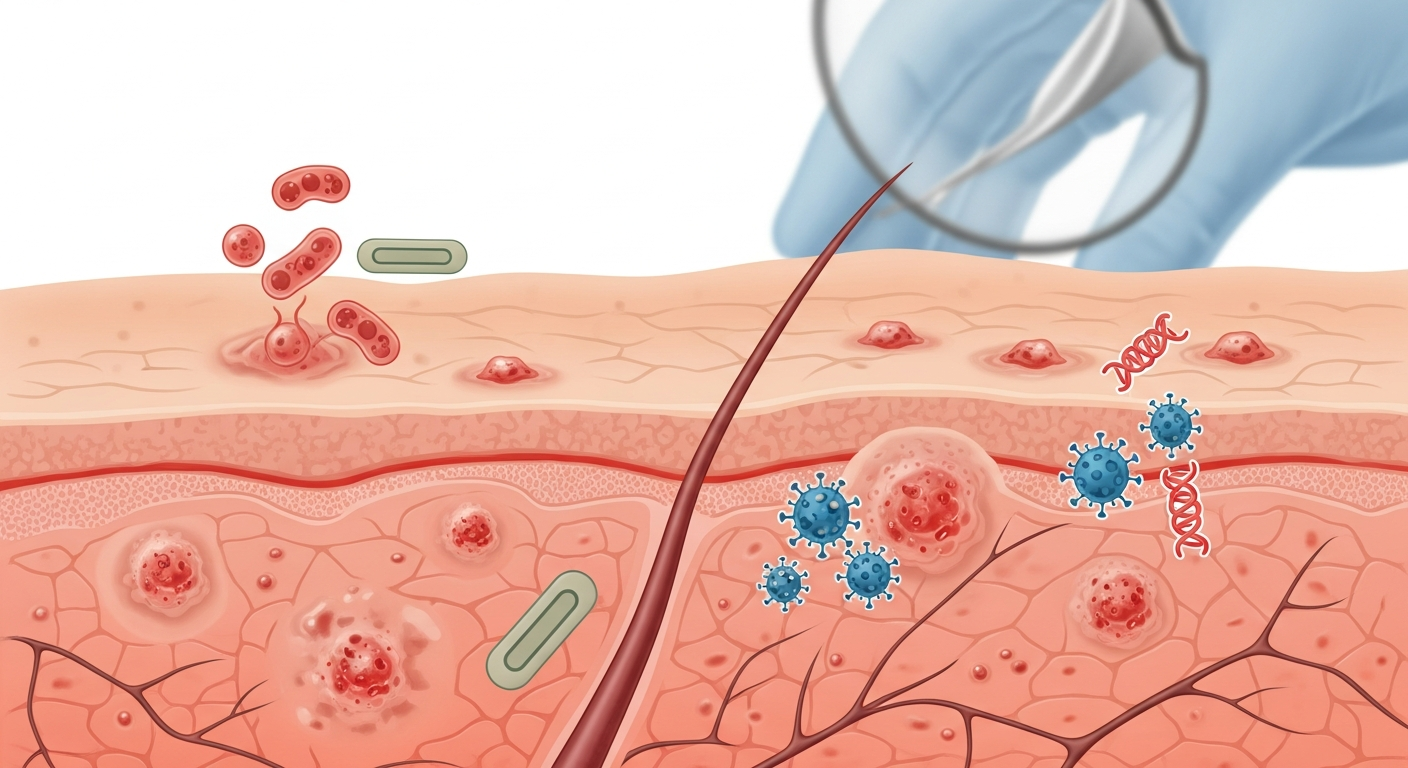
No — most rashes are not caused by infection. The majority of common rashes are inflammatory (eczema, psoriasis, contact dermatitis, hives), autoimmune, or related to heat or physical triggers. However, some rashes are caused by bacterial, viral, or fungal infections and require specific antimicrobial treatment. Knowing whether a rash is infectious or non-infectious is clinically critical — antihistamines and steroid cream are appropriate for allergic rashes but can worsen infections, while antibiotics are life-saving for bacterial rashes but useless for eczema. Key clues that a rash may be infectious: fever, spreading in a wave-like pattern from a central point, warmth and tenderness at the rash site, pus-filled blisters, associated throat pain or respiratory illness, or an identifiable point of skin entry (cut, bite, scratch).
Quick Medical Summary
Rashes Caused by Bacterial Infection
Bacterial rashes require antibiotic treatment — they will not resolve with steroid cream or time alone, and untreated bacterial skin infections can spread and cause serious systemic illness. Impetigo is a highly contagious superficial skin infection, typically caused by Staphylococcus aureus or Streptococcus pyogenes, producing honey-colored crusted sores and blisters around the nose, mouth, and skin breaks in children. Topical mupirocin or oral antibiotics (cephalexin, flucloxacillin) are effective. Cellulitis is a deep skin bacterial infection producing a rapidly expanding area of redness, warmth, swelling, and tenderness — usually on the legs — from a skin entry point. It requires oral or intravenous antibiotics and can spread to the bloodstream (septicemia) if untreated. Scarlet fever produces a widespread 'sandpaper' rash with fever, sore throat, and strawberry tongue, caused by Group A Streptococcus releasing pyrogenic exotoxins. Erysipelas is a superficial cellulitis with a sharply defined, raised, intensely red, warm border — typically on the face or lower legs — caused by Streptococcus. Folliculitis (infected hair follicles) presents as pus-filled papules and pustules at hair follicle openings — most commonly from Staph aureus after shaving, waxing, or in skin occluded by tight clothing.
Rashes Caused by Viral and Fungal Infections
Viral rashes (viral exanthems) are caused by the immune response to viral infection rather than direct skin invasion by the virus. Common examples include roseola (HHV-6), fifth disease (parvovirus B19), measles, chickenpox (varicella zoster), hand-foot-and-mouth disease (coxsackievirus), and rubella. Most viral rashes are self-limiting and do not require specific antiviral treatment in healthy individuals — treatment is supportive (antihistamines for itch, antipyretics for fever). Exceptions: herpes zoster (shingles) responds to early antiviral therapy (aciclovir, valaciclovir) within 72 hours of rash onset to reduce severity and the risk of post-herpetic neuralgia; and severe viral infections in immunocompromised patients may require IV antiviral therapy. Fungal rashes require specific antifungal treatment — they do not respond to antihistamines or steroids. Common fungal skin infections include ringworm (tinea corporis), athlete's foot (tinea pedis), jock itch (tinea cruris), nail fungus (onychomycosis), and candidal intertrigo (yeast infection in skin folds). The key clinical feature of fungal rashes is the well-defined, advancing, scaly border — confirming diagnosis with a KOH skin scraping is simple and definitive.
Non-Infectious Rashes That Are Commonly Mistaken for Infection
Many non-infectious rashes are unnecessarily treated with antibiotics due to misdiagnosis. Eczema (atopic dermatitis) with weeping, crusting, and redness is frequently confused with impetigo. Key difference: eczema has chronic history, typically occurs in skin folds, responds to topical steroids, and lacks the golden crust of impetigo. However, eczema can become secondarily infected with Staph aureus (impetigo on top of eczema) — both conditions may coexist and require simultaneous treatment. Contact dermatitis from poison ivy, nickel, or cosmetics causes blistering and weeping rash that looks dramatically infected but has no bacteria — the cause is a T-cell-mediated immune reaction, not pathogens. Topical steroids (not antibiotics) are the appropriate treatment. Rosacea — a facial redness and papule condition — is routinely confused with facial cellulitis. Key difference: rosacea is chronic, bilateral, associated with flushing triggers, and involves no fever or warmth spreading from a central point. Hives (urticaria) can look alarmingly inflamed but are purely histamine-driven and respond completely to antihistamines without antibiotics. Drug rashes producing widespread morbilliform eruptions are frequently misdiagnosed as viral infections, leading to antibiotic treatment that may itself cause further drug reactions.
Key Symptoms
- Signs of bacterial infection: fever, warmth, spreading redness from a central point, pus
- Signs of viral rash: widespread symmetric spots, accompanied by fever and respiratory symptoms
- Signs of fungal rash: ring shape with scaly border, slow expansion, no fever
- Signs of non-infectious rash: itching dominant, no fever, associated allergen or trigger
- Honey-colored crusts around nose and mouth in children: impetigo (bacterial)
- Expanding warm, tender, red area from skin break on lower leg: cellulitis (bacterial)
Treatment Options
- Bacterial (impetigo, cellulitis): antibiotics — topical or oral as appropriate
- Viral exanthem: supportive care; antivirals for shingles within 72 hours of rash
- Fungal (ringworm, athlete's foot): antifungal cream for 4 weeks
- Contact dermatitis: remove allergen, topical steroid, cool compresses
- Eczema: topical steroids, emollients, trigger avoidance
- Hives/urticaria: oral antihistamines — no antibiotics needed
When to See a Doctor Immediately
- Difficulty breathing or swallowing
- Swelling of the face, lips, or tongue
- High fever or severe chills
- Rapid spreading over a large body surface area
- Extreme pain, dizziness, or confusion
Frequently Asked Questions
Disclaimer
The medical information provided in this article is for educational purposes only and should not replace professional medical advice, diagnosis, or treatment. Always consult with a board-certified dermatologist or primary care physician regarding any severe or persistent skin conditions.