Can Stress Cause Rashes?
Medically Reviewed By
Dr. Marcus Chen, FAAD
Last Updated
January 18, 2026
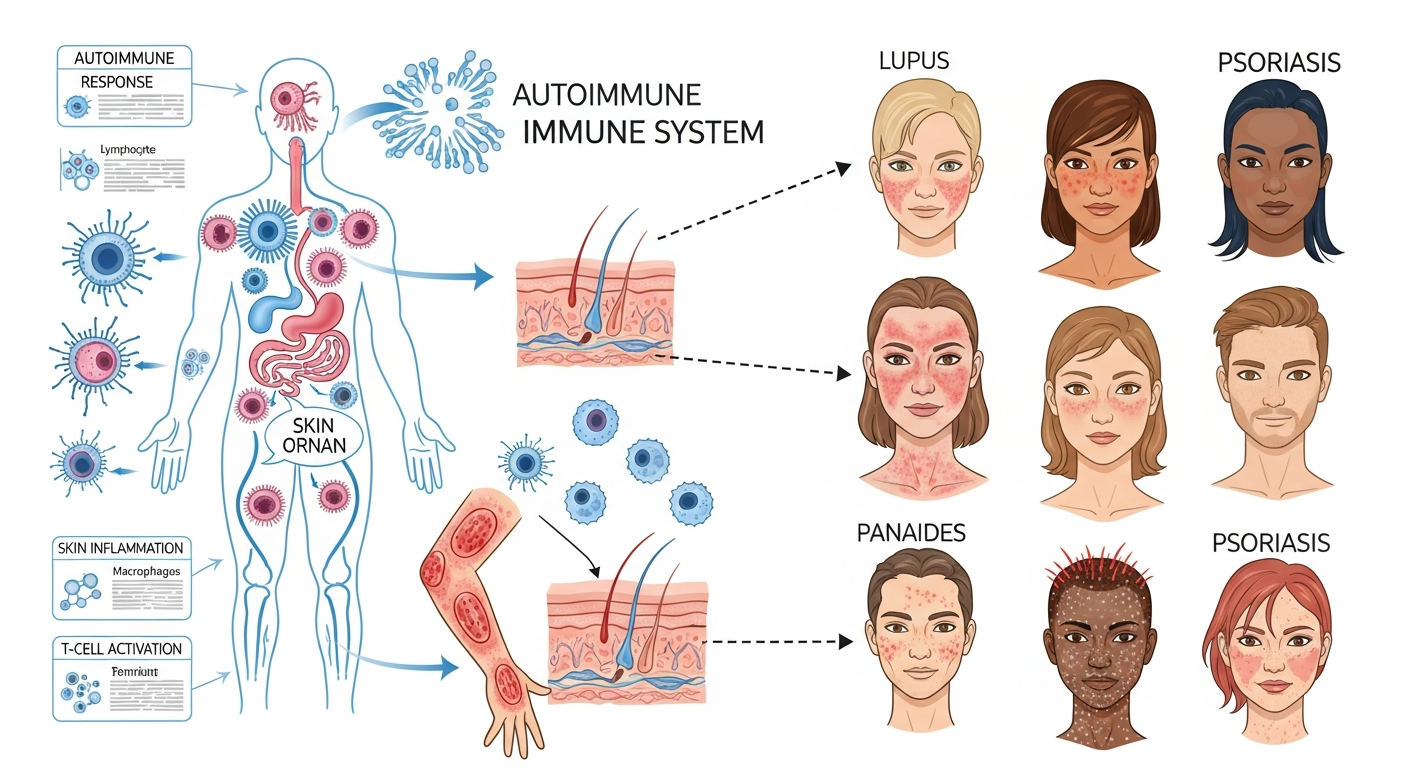
Yes, psychological stress can directly cause skin rashes and significantly worsen pre-existing conditions. This is not psychosomatic — there is well-established immunological and neurological evidence for the skin-brain connection. When you experience acute stress, your hypothalamus triggers the release of cortisol and adrenaline. These hormones cause mast cells in the skin to release histamine, producing hives (urticaria). Chronic stress takes a different toll: it dysregulates the HPA (hypothalamic-pituitary-adrenal) axis, causes sustained immune activation, increases skin sensitivity, and weakens the skin barrier — all of which dramatically worsen inflammatory skin conditions including eczema, psoriasis, rosacea, and seborrheic dermatitis. Stress-related rashes most commonly appear on the neck, chest, face, and arms — areas richest in mast cells and nerve endings. If you notice your skin flares during periods of high anxiety, work pressure, or emotional upheaval, the stress-skin connection is a real and treatable phenomenon, not a coincidence.
Quick Medical Summary
The Science Behind Stress-Induced Rashes
Skin and the nervous system share the same embryological origin — both develop from the ectoderm — and they remain profoundly interconnected throughout life. Skin contains an extensive network of neuropeptide-releasing nerve fibers. Under psychological stress, the nervous system releases substance P and calcitonin gene-related peptide (CGRP) directly into the skin. These neuropeptides activate mast cells, which release histamine, serotonin, and prostaglandins, triggering the classic triple response of Lewis: redness, swelling, and itching. Acute stress typically produces hives within hours — this is why some people break out in hives before a major presentation, exam, or confrontation. Chronic stress operates differently: sustained cortisol elevation (paradoxically) impairs the immune system's regulatory function, allowing T-helper 2 cells to dominate, which drives the IgE-mediated inflammatory cascade underlying eczema. The skin barrier — critically dependent on ceramide and filaggrin proteins — deteriorates under chronic stress, increasing transepidermal water loss and allergen penetration. This is why eczema, psoriasis, and rosacea patients consistently report that stress is their number-one flare trigger.
Types of Rashes Triggered or Worsened by Stress
Acute stress hives (stress urticaria) are the most direct manifestation: raised, intensely itchy wheals that appear within hours of a stressful event and typically resolve within 24 hours. They can occur anywhere on the body. Eczema flares driven by stress look the same as allergic eczema but often appear in the absence of other triggers — the emotional event alone drives the eruption. Psoriasis, driven by T-cell overactivation, is exquisitely sensitive to stress: many patients report their initial psoriasis diagnosis followed a major life stressor (bereavement, divorce, injury). Seborrheic dermatitis — a yeast-related rash causing flaking red patches on the scalp, nose creases, and eyebrows — reliably flares under psychological pressure, likely because stress alters the skin microbiome. Rosacea (facial flushing, redness, and papules) is another stress-exacerbated condition — anxiety and emotional stress trigger facial vasodilation directly through the sympathetic nervous system. Perioral dermatitis and acne also have well-documented stress-related components through the androgen-sebum pathway.
Breaking the Stress-Rash Cycle
Treating stress-related rashes requires a two-pronged approach: managing the skin symptoms while addressing the underlying psychological stress. For acute stress hives, oral antihistamines — cetirizine (Zyrtec) 10mg or loratadine (Claritin) 10mg — taken at the first sign of hives effectively blocks histamine receptors and reduces severity. For chronic flare conditions like eczema and psoriasis, prescription treatments (topical steroids, calcineurin inhibitors, biologics) manage the skin while stress reduction techniques address the root driver. Cognitive behavioral therapy (CBT) has clinical evidence for reducing eczema severity through stress management. Mindfulness-based stress reduction (MBSR) has been studied specifically in psoriasis, where patients using mindfulness meditation cleared plaques significantly faster than controls receiving identical light therapy without the mindfulness component. Regular aerobic exercise — 30 minutes, five days per week — reduces cortisol levels and attenuates the inflammatory cascade. Adequate sleep (7–9 hours) is non-negotiable: sleep deprivation alone recreates the same cortisol dysregulation as chronic stress. Biofeedback therapy has shown benefit in reducing psychophysiological reactivity in eczema patients. In severe or refractory cases, psychiatry or psychology referral combined with dermatology care produces better outcomes than dermatology alone.
Key Symptoms
- Hives appearing within hours of an acute stressful event
- Known eczema, psoriasis, or rosacea flaring during stressful periods
- Itching that worsens with anxiety even without new allergen exposure
- Seborrheic dermatitis flaking worsening during work or life pressure
- Facial flushing and redness triggered by emotional situations
- Skin that heals slowly or cycles through repeated flares without obvious cause
Treatment Options
- Oral antihistamines (cetirizine, loratadine) for acute stress hives
- Cognitive behavioral therapy (CBT) to reduce the stress-itch feedback loop
- Mindfulness-based stress reduction (MBSR) — clinically proven for psoriasis
- Regular aerobic exercise to reduce baseline cortisol levels
- 7–9 hours of quality sleep to normalize HPA axis function
- Topical treatments (steroids, calcineurin inhibitors) for skin symptom control
When to See a Doctor Immediately
- Difficulty breathing or swallowing
- Swelling of the face, lips, or tongue
- High fever or severe chills
- Rapid spreading over a large body surface area
- Extreme pain, dizziness, or confusion
Frequently Asked Questions
Disclaimer
The medical information provided in this article is for educational purposes only and should not replace professional medical advice, diagnosis, or treatment. Always consult with a board-certified dermatologist or primary care physician regarding any severe or persistent skin conditions.