Can Food Allergies Cause a Rash?
Medically Reviewed By
Dr. Marcus Chen, FAAD
Last Updated
January 20, 2026
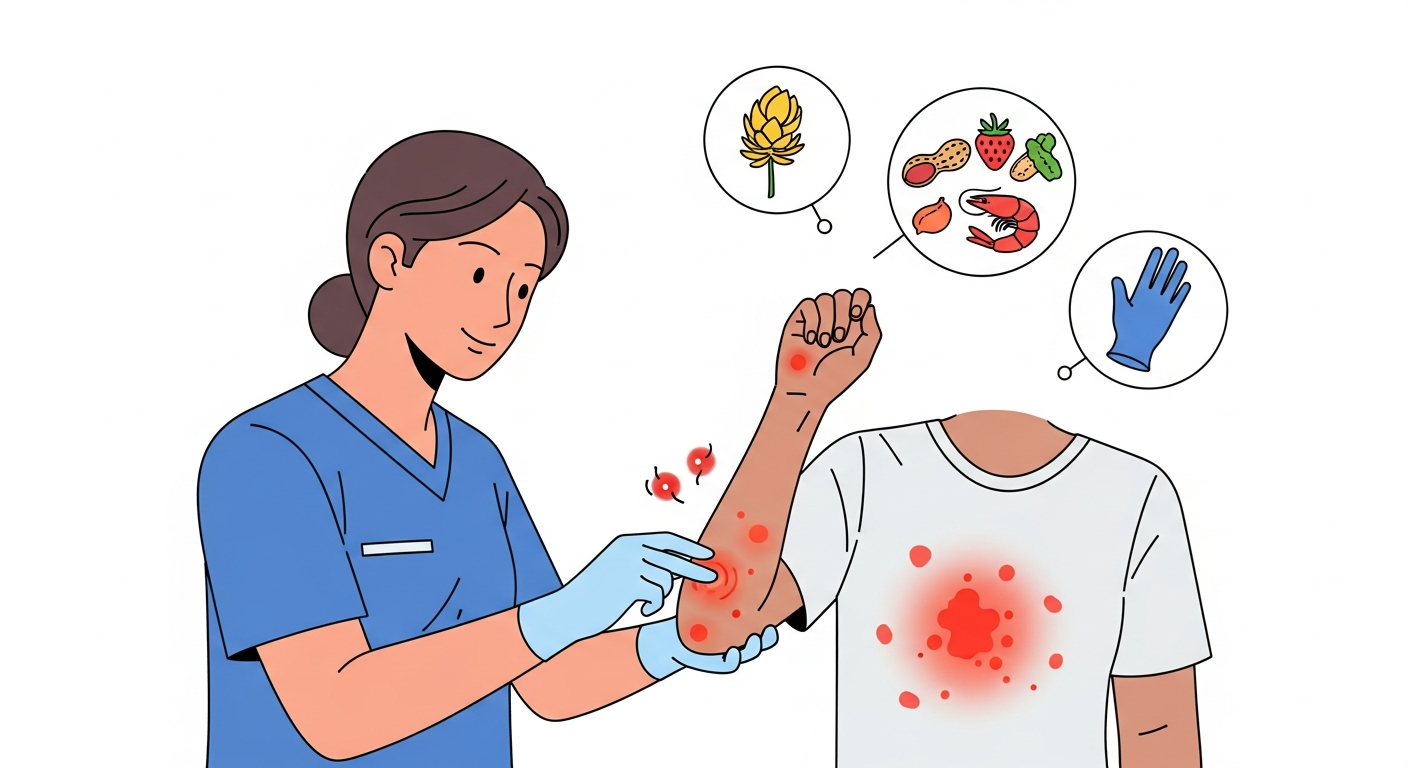
Yes, food allergies are a recognized cause of several types of skin rash. IgE-mediated food allergies — the type that produces rapid immune responses — can trigger acute urticaria (hives) anywhere on the body within minutes to 2 hours of eating the trigger food. The eight major food allergens — milk, eggs, wheat, soy, peanuts, tree nuts, shellfish, and fish — account for the vast majority of food-allergic reactions. In children, cow's milk protein allergy commonly causes atopic eczema flares, and some children's eczema improves substantially when allergen foods are eliminated under dietitian guidance. Food protein-induced enterocolitis syndrome (FPIES) can cause skin flushing and pale, clammy skin alongside gastrointestinal symptoms in infants. Oral allergy syndrome (OAS) causes localized itching and tingling around the mouth and lips — not technically a rash but worth distinguishing. At the most severe end, anaphylaxis from peanut, tree nut, shellfish, or fish allergy produces widespread urticaria, angioedema (swelling of the face and throat), and life-threatening cardiovascular compromise.
Quick Medical Summary
How Food Allergies Cause Skin Rashes
Food-triggered skin rashes operate through two primary immune mechanisms. The first is IgE-mediated (immediate type) allergy: specific IgE antibodies against food proteins bind to mast cells in skin tissue. When the food is ingested, food proteins are absorbed into the bloodstream, travel to the skin, and crosslink these IgE antibodies on mast cells, triggering degranulation. Histamine, leukotrienes, and prostaglandins are released, causing the classic urticarial response: raised, itchy wheals (hives) anywhere on the body, appearing within 15–60 minutes of eating. Angioedema (swelling of deeper skin layers) often accompanies urticaria, particularly affecting the lips, eyelids, and tongue. The second mechanism is T-cell-mediated (delayed type): relevant primarily for eczema triggered by food. In atopic children, IgE-mediated sensitization to food proteins (through gut or skin exposure) and T-cell responses combine to sustain chronic skin inflammation. Food elimination studies in children with severe atopic eczema show 30–40% respond to elimination of one or more foods — most commonly egg, milk, wheat, and soy in young children, and peanut, tree nuts, and shellfish in older children. Adults with food-triggered eczema do exist but are considerably less common than in children.
Food Allergy vs. Food Intolerance: Which Causes Rash?
An important distinction: food allergy and food intolerance are different conditions that are frequently confused. Food allergy involves an immune reaction to a food protein — IgE-mediated for immediate reactions, T-cell-mediated for delayed reactions. It can cause skin rash, GI symptoms, and anaphylaxis. Food intolerance involves a non-immunological adverse reaction to food — the most common examples are lactose intolerance (lack of the enzyme to digest milk sugar) and fructose malabsorption. Food intolerance causes primarily gastrointestinal symptoms (bloating, diarrhea, cramping) and does not cause urticaria or eczema. The rashes most often confused with food intolerance reactions are actually IgE-mediated food allergy (true rash from immune reaction) or unrelated coincidental inflammatory skin flares. Flushing (redness of face and chest) can occur from certain foods through non-allergic mechanisms: histamine-rich foods (red wine, aged cheese, fermented foods) in people with histamine intolerance; scombroid fish poisoning (improperly stored fish); and sulfite-containing foods (wine, dried fruit) in sensitive individuals. These produce a 'flush' rather than a true urticarial rash and do not indicate IgE-mediated allergy.
Testing for Food Allergy Rashes and Management
Diagnosing food-triggered skin rashes requires careful history-taking, allergy testing, and in some cases elimination diets under specialist supervision. Skin prick testing (SPT) is performed by applying drops of standardized food allergen extracts to the forearm and pricking through each drop — a positive wheal-and-flare reaction at 15 minutes indicates IgE sensitization. SPT is highly sensitive for immediate food allergy but has false positives, particularly for raw fruit allergens (cross-reactive with pollen). Serum specific IgE testing (ImmunoCAP) measures the level of food-specific IgE antibodies in blood — higher levels correlate with greater likelihood of clinical reaction. Component-resolved diagnostics (CRD) tests for specific molecular components within allergen sources (e.g., Ara h 2 in peanut, which indicates true peanut allergy rather than cross-reactive false positives). For eczema-triggered by food in children, empirical elimination of the most likely culprit (usually milk and egg in infants) for 4–6 weeks under dietitian supervision, followed by structured reintroduction, confirms or refutes food as a trigger. Management of food allergy rash: strict avoidance of the trigger food, oral antihistamines for mild to moderate hive reactions, and carrying an epinephrine auto-injector (EpiPen) for any food allergy with prior history of severe reactions or anaphylaxis.
Key Symptoms
- Hives appearing within 30–60 minutes of eating the trigger food
- Swelling of lips, tongue, or eyelids (angioedema) alongside skin hives
- Eczema flaring reliably after eating certain foods, particularly in children
- Tingling and itching around the mouth after eating raw fruits (oral allergy syndrome)
- Skin flushing (face/chest redness) after histamine-rich foods or alcohol
- Widespread urticaria, throat swelling, and dizziness (anaphylaxis — emergency)
Treatment Options
- Strict avoidance of confirmed trigger food(s)
- Oral antihistamines (cetirizine, loratadine) for mild-moderate hive reactions
- Epinephrine auto-injector (EpiPen) for any history of severe reactions — carry at all times
- Food elimination diet (under dietitian guidance) for food-triggered eczema in children
- Skin prick or specific IgE blood testing for formal allergy diagnosis
- Oral immunotherapy (OIT) for peanut allergy (FDA-approved) through allergy specialist
When to See a Doctor Immediately
- Difficulty breathing or swallowing
- Swelling of the face, lips, or tongue
- High fever or severe chills
- Rapid spreading over a large body surface area
- Extreme pain, dizziness, or confusion
Frequently Asked Questions
Disclaimer
The medical information provided in this article is for educational purposes only and should not replace professional medical advice, diagnosis, or treatment. Always consult with a board-certified dermatologist or primary care physician regarding any severe or persistent skin conditions.