Rash on Feet: Causes, Diagnosis, and Treatment
Medically Reviewed By
Dr. Marcus Chen, FAAD
Last Updated
November 5, 2025
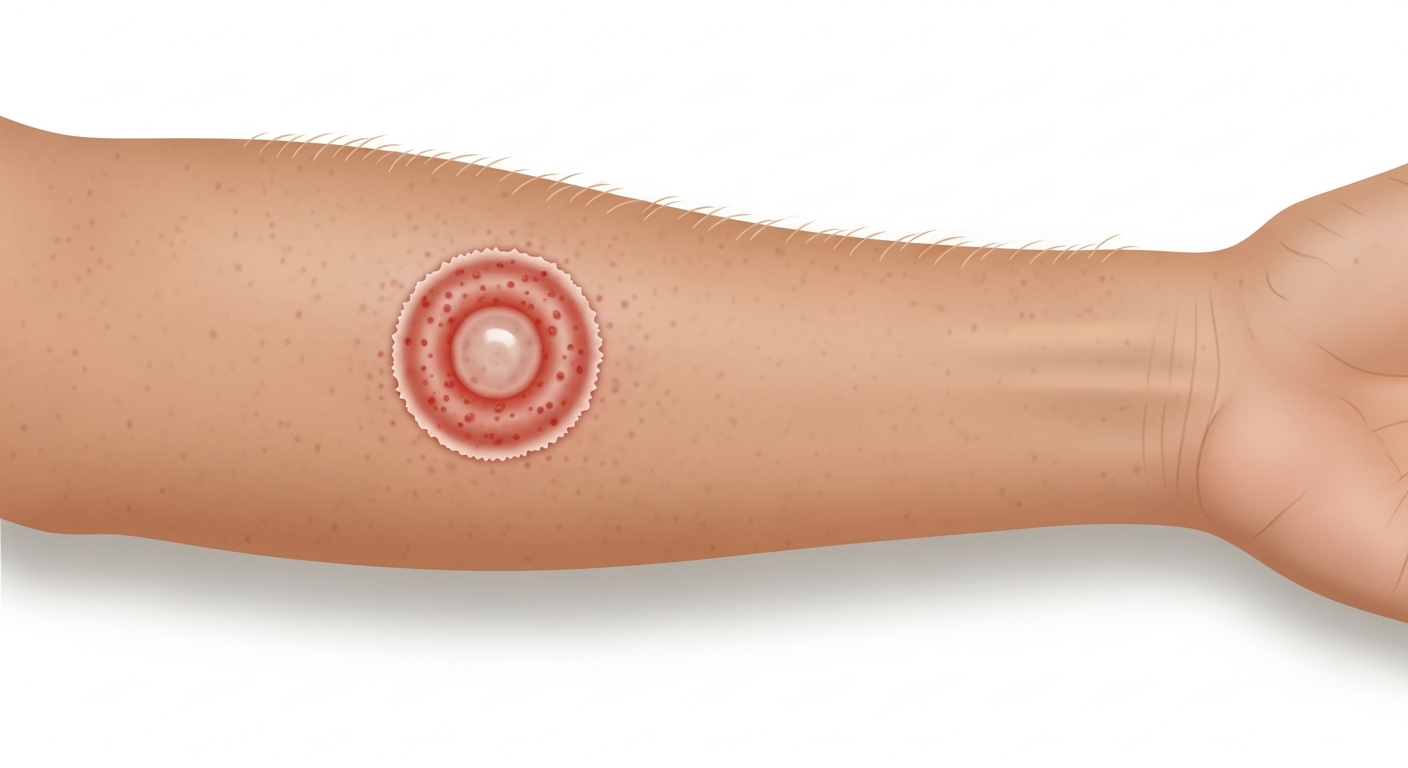
Foot rashes are extremely common — the feet are a unique dermatological environment: constant friction and pressure from footwear, warm and often humid conditions inside shoes promoting fungal growth, and perpetual contact with socks, shoe materials, and topical agents. The single most important foot rash diagnosis to make early is athlete's foot (tinea pedis), which affects one in five adults at any given time and, if left untreated, can spread to the nails (onychomycosis), hands (tinea manuum), and groin (tinea cruris). Contact dermatitis from shoe materials — rubber, leather dyes, adhesives, and chromate in shoe tanning — is substantially underdiagnosed and requires patch testing to identify. Dyshidrotic eczema (pompholyx) on the soles produces the same intensely itchy vesicles as on the palms. Palmoplantar psoriasis causes thick, cracked, painful plaques on the soles that can severely impair walking. Chilblains (pernio) in cold climates cause red, itchy, swollen patches on the toes after cold exposure. This guide covers foot rash by location, how to distinguish the major causes, warning signs, and targeted treatment protocols.
Quick Medical Summary
Most Common Causes of Rash on the Feet
Athlete's foot (tinea pedis) is the most common foot rash worldwide. Three clinical patterns: interdigital type — the most common, producing maceration (white, soft, peeling skin), scaling, and fissuring between the toes (particularly the fourth and fifth toe web space); moccasin type — diffuse, dry, powdery scaling covering the entire sole and sides of the foot; vesicular type — intensely itchy vesicles on the instep (arch area) that rupture and leave raw, painful skin. Tinea pedis is caused by dermatophyte fungi (Trichophyton rubrum most commonly), thrives in warm, humid environments (gym showers, swimming pools, sweaty shoes), and is contagious through direct contact or contaminated surfaces. Treatment is topical terbinafine or clotrimazole for 4 weeks; oral terbinafine is needed when nails are involved. Shoe contact dermatitis produces a rash on the dorsum (top) of the foot and toes in the exact distribution of shoe coverage — sparing the instep (where the shoe sole does not contact) and the web spaces (where there is no direct shoe material contact). Common allergens include rubber accelerators (thiuram, carbamates), chromate in leather, adhesives (colophony), and dye chemicals. Patch testing is essential for diagnosis. Dyshidrotic eczema on the soles mirrors the palmar presentation: deep-seated, intensely itchy vesicles on the instep and sides of the feet, often coinciding with palmar involvement. Chilblains (pernio) occur after cold exposure, producing painful, red, swollen, itchy patches on the toes and dorsal foot that turn dusky purple with more prolonged cold. They resolve spontaneously with warming.
Symptom Breakdown: Foot Rash by Location
Between the toes (interdigital spaces): athlete's foot (tinea pedis) — white maceration, scaling, fissuring, mild itch. Contact dermatitis from socks can also affect this area if sock elastic or dye touches the skin between toes. Candidal intertrigo (yeast infection) between the toes produces a brighter red, raw appearance with satellite pustules, distinguishable from tinea by these satellite lesions and by KOH microscopy. Sole of the foot (plantar surface): moccasin-type tinea pedis (dry, powdery, full-sole scaling); dyshidrotic eczema (deep vesicles on instep); palmoplantar psoriasis (thick, yellow, cracked, painful plaques — may have sterile pustules in pustular type); keratoderma (extreme thickening from various causes). Dorsum (top of foot): shoe contact dermatitis (exactly matching shoe coverage); dorsal tinea pedis (rare — ring-shaped); chilblains on the toes (red, swollen, itchy toes after cold). Toes and nails: psoriatic nail involvement (pitting, onycholysis, oil-drop discoloration); onychomycosis from tinea (thick, yellow, crumbly, separated nail); tinea on the toe tips spreading to nails. Heel: fissured heel (keratoderma) from extreme dryness; plantar warts (verruca plantaris — firm, rough, painful pressure points with disrupted skin lines and black dots from thrombosed capillaries).
When to Worry: Red Flag Signs for Foot Rash
Most foot rashes are benign and treatable, but specific presentations require urgent medical attention. A non-healing or slowly enlarging ulcer on the foot in a person with diabetes is a medical emergency — diabetic foot ulcers can rapidly progress to osteomyelitis (bone infection) and require limb-threatening surgery if neglected. Any foot sore in a diabetic should be evaluated by a healthcare professional within 24–48 hours. Rapidly spreading warmth, redness, and swelling from a toe or foot wound with fever indicates cellulitis or, in severe cases, necrotizing fasciitis — call a doctor today and go to the emergency department if the pain seems disproportionate to the appearance or if crepitus (crackling) is felt. Severe tinea pedis with fissuring between toes is not just uncomfortable — those fissures are common entry points for bacterial skin infections (cellulitis) on the lower legs. Treating athlete's foot promptly prevents cellulitis. Vesicular foot rash in a child with fever and mouth sores suggests hand-foot-mouth disease (coxsackievirus) — mild and self-limiting but highly contagious. Rash on the soles of the feet as part of a widespread body rash with palmar involvement in a sexually active adult: secondary syphilis characteristically affects the palms and soles — this is an important diagnostic clue requiring STI testing. Plantar keratoderma with palmar involvement (both soles and palms thickened): can indicate palmoplantar psoriasis or, rarely, systemic conditions including paraneoplastic keratoderma.
Treatment Overview for Foot Rash
Athlete's foot (tinea pedis): topical terbinafine 1% cream applied once or twice daily for 2–4 weeks for interdigital and vesicular types; terbinafine cream for 4 weeks for moccasin type (longer duration needed for thick plantar skin). Dry the feet thoroughly after bathing, especially between toes; wear moisture-wicking socks; use antifungal powder in shoes; avoid barefoot in public shower areas. Oral terbinafine (250mg daily for 2 weeks for skin; 6–12 weeks for nails) is required when onychomycosis is present or when topical treatment fails. Shoe contact dermatitis: patch testing to identify the specific shoe allergen; switch to shoe brands without the allergen (hypoallergenic shoes exist specifically for chromate-allergic individuals); prescription topical steroids to clear the active reaction. Dyshidrotic eczema on feet: similar to palmar management — potent topical steroids during the vesicle phase; emollient during resolution. Palmoplantar psoriasis: clobetasol 0.05% under occlusion; acitretin for pustular type; biologics for severe disease affecting both palms and soles. Chilblains: keep feet warm (wool socks, well-insulated boots); apply emollient; nifedipine (calcium channel blocker) for severe or recurrent chilblains by prescription. Plantar warts: salicylic acid 40% plasters applied nightly with debridement; cryotherapy in a clinical setting; or watchful waiting (up to 70% resolve spontaneously within 2 years in healthy individuals).
Key Symptoms
- White macerated skin and fissuring between toes (athlete's foot, interdigital type)
- Dry, powdery scaling covering the entire sole (moccasin tinea pedis)
- Deep-seated itchy vesicles on the instep (dyshidrotic eczema or vesicular tinea)
- Rash on top of foot matching exact shoe coverage, sparing instep (shoe contact dermatitis)
- Thick, cracked, painful plaques on sole (palmoplantar psoriasis)
- Red, swollen, itchy toes after cold exposure (chilblains/pernio)
- Painful pressure point with black dots under callus (plantar wart)
- Non-healing foot ulcer in diabetic patient (diabetic foot — emergency)
Treatment Options
- Athlete's foot: topical terbinafine 2–4 weeks; oral terbinafine for nail involvement
- Prevent athlete's foot: dry between toes; moisture-wicking socks; antifungal powder
- Shoe contact dermatitis: patch test; hypoallergenic footwear; topical steroid
- Dyshidrotic eczema: potent topical steroid (vesicle phase); emollient (resolution phase)
- Palmoplantar psoriasis: clobetasol under occlusion; acitretin; biologics
- Chilblains: wool socks; foot warming; nifedipine for severe cases
- Plantar warts: salicylic acid 40%; cryotherapy; or watch-and-wait 2 years
- Diabetic foot ulcer: immediate healthcare evaluation within 24–48 hours
| Condition | Location on Foot | Key Feature | Treatment |
|---|---|---|---|
| Tinea Pedis (interdigital) | Between toes | Maceration, fissuring, mild itch | Topical terbinafine 2–4 weeks |
| Tinea Pedis (moccasin) | Entire sole + sides | Dry powdery scaling, KOH positive | Topical terbinafine 4 weeks |
| Shoe Contact Dermatitis | Dorsum matching shoe | Matches shoe coverage exactly | Patch test; allergen avoidance |
| Dyshidrotic Eczema | Instep and sole edges | Deep vesicles, intense itch | Potent topical steroid |
| Palmoplantar Psoriasis | Entire sole | Thick yellow painful plaques | Clobetasol; acitretin; biologics |
| Chilblains | Toes, dorsum | Red/purple swollen toes after cold | Warming; emollient; nifedipine |
Diagnose and Treat Your Rash
When to See a Doctor Immediately
- Difficulty breathing or swallowing
- Swelling of the face, lips, or tongue
- High fever or severe chills
- Rapid spreading over a large body surface area
- Extreme pain, dizziness, or confusion
Frequently Asked Questions
Disclaimer
The medical information provided in this article is for educational purposes only and should not replace professional medical advice, diagnosis, or treatment. Always consult with a board-certified dermatologist or primary care physician regarding any severe or persistent skin conditions.