Rash on Arms: Causes, Identification, and Treatment
Medically Reviewed By
Dr. Marcus Chen, FAAD
Last Updated
January 8, 2026
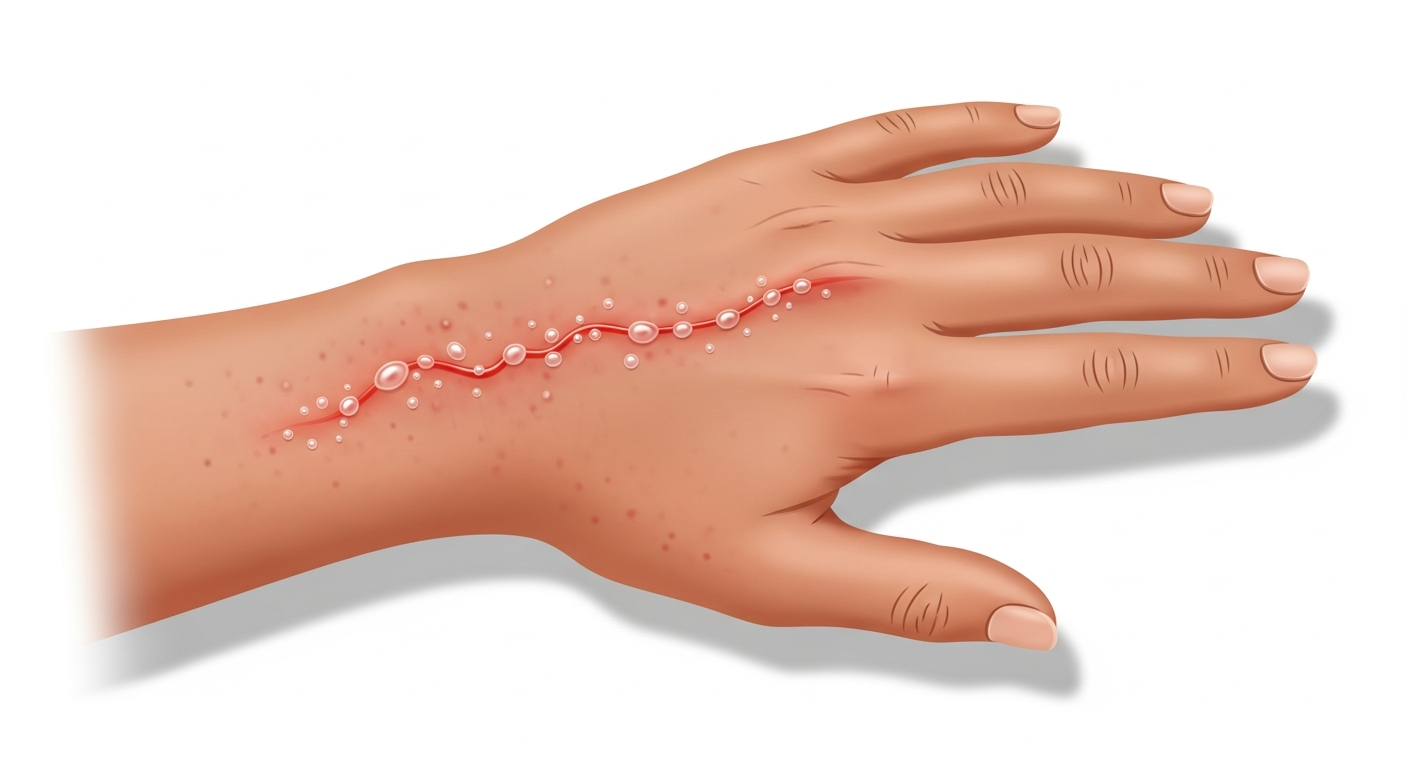
Rashes on the arms are extremely common and encompass some of the most distinct diagnostic patterns in dermatology. The arms span multiple anatomical zones with very different predispositions: the inner elbow creases (antecubital fossae) are the classic location for atopic eczema flexural involvement; the outer upper arms are the most common site for keratosis pilaris (rough follicular bumps); the forearms are a primary site for contact dermatitis (from wrist jewelry, watch straps, and plants), polymorphic light eruption (from sun exposure on the outer forearms), and lichen planus (flat-topped purple papules on the wrists); and the upper back of the arms is a common psoriasis plaque location. The same rash can look dramatically different on the inner versus outer arm, which is diagnostically valuable. This guide covers the eight major causes of arm rash, their characteristic locations, how to distinguish them, and the evidence-based treatments for each. For comprehensive visual comparison of rash types, see our rash pictures photo guide. For broader diagnosis guidance, see how doctors diagnose skin rashes.
Quick Medical Summary
Most Common Causes of Rash on the Arms
Atopic eczema (atopic dermatitis) is the single most common cause of arm rash in both children and adults. Its characteristic location is the antecubital fossa (inner elbow crease) and the wrist flexures — the skin here becomes intensely itchy, red, dry, and scaly during flares, and lichenifies (thickens and darkens) with chronic scratching. Contact dermatitis on the arms follows the shape of the allergen contact: nickel in watch buckles and bracelets causes a rectangular or band-shaped rash on the wrist; poison ivy contact produces streaky linear blisters corresponding to plant brush contact; rubber wristbands cause band-shaped rash exactly at their contact area. Keratosis pilaris — tiny, rough, follicular papules (bumps) on the outer upper arms, resembling 'chicken skin' — is extremely common (affecting 40% of adults) and benign, caused by keratin plugging of hair follicles. It is not truly a rash but a texture variation of the skin. Psoriasis on the arms produces well-defined, thick, silver-scaled plaques most prominently on the outer elbows and the back of the upper arms — a characteristic psoriasis location. Ringworm (tinea corporis) on the arms presents as the classic scaly ring with a raised outer border, most commonly contracted from pets or soil contact, and responds to topical antifungal treatment. Polymorphic light eruption (PLE) is sun-triggered, producing itchy papules and vesicles on the outer forearms (sun-exposed) while sparing the inner forearms (sun-protected) — a distinctive asymmetry that clinches the diagnosis. Lichen planus produces shiny, flat-topped, polygonal purple papules predominantly on the wrists and inner forearms, often with Wickham's striae (white lacy lines on the surface).
Symptom Breakdown: Arm Rash Location and Appearance
Inner elbow crease (antecubital fossa): atopic eczema virtually exclusively. The skin becomes thickened and hyperpigmented from chronic scratching, a process called lichenification. If the rash involves both inner elbows symmetrically in a person with a history of asthma or hay fever, atopic eczema is virtually certain. Wrist and forearm: contact dermatitis from jewelry (nickel, gold) or watch straps is the most common cause; lichen planus is an important less-common diagnosis here (purple, shiny, flat-topped papules, not scaly). Outer forearm: sun-triggered PLE after initial spring sun exposure; contact dermatitis from outdoor exposures (plants, occupational chemicals). Outer upper arms: keratosis pilaris (rough texture, small bumps, not inflamed unless irritated — improves with moisturizing). Outer elbows: psoriasis (well-defined, thick, silvery plaques — may also affect the knees and scalp). Upper inner arms: hidradenitis suppurativa (recurrent painful nodules and scarring in the armpit and upper inner arm — a chronic follicular condition, not an infectious rash). Full arm distribution: drug rashes (widespread morbilliform eruption), chickenpox in children (vesicles in all stages throughout the body including arms). Scabies preferentially involves the wrists and finger webs — the intensely itchy burrow lines and nocturnal itching pattern distinguish it.
When to Worry: Red Flag Arm Rash Signs
Most arm rashes are inflammatory and not dangerous, but specific features require urgent evaluation. Expanding warmth, swelling, and redness from a wound, insect bite, or skin break on the arm — accompanied by fever — indicates cellulitis, a bacterial infection requiring antibiotic treatment. Mark the border at first presentation; if it expands beyond the mark within 12 hours despite antibiotics, seek emergency care for IV antibiotics. Red streaking extending from the rash site upward toward the elbow or armpit (lymphangitis) is a medical emergency — bacteria are spreading through the lymphatic system. Non-blanching petechiae or purpura (purple non-blanching spots) on the arms may indicate vasculitis or a systemic bleeding disorder. Blistering rash following a single dermatomal band along one arm (e.g., from shoulder to wrist on one side only) with burning pain preceding it suggests herpes zoster (shingles) — start antiviral treatment within 72 hours. Rapidly spreading hives on the arms accompanied by throat tightness or breathing difficulty indicate anaphylaxis — administer epinephrine and call emergency services. Any arm rash in an immunocompromised patient (on chemotherapy, HIV, organ transplant) requires prompt medical evaluation, as infections present atypically and can progress rapidly in immunocompromised individuals.
Treatment Overview for Arm Rash
Treatment depends entirely on the underlying cause. For atopic eczema on the arms: apply a thick emollient (petroleum jelly, ceramide cream) immediately after bathing and throughout the day. During active flares, use a moderate-to-potent topical corticosteroid (betamethasone valerate 0.1%, mometasone furoate 0.1%) once daily on the body until the flare resolves, then reduce to an as-needed maintenance schedule. Topical calcineurin inhibitors (tacrolimus, pimecrolimus) are alternatives for maintenance therapy. For severe, poorly controlled atopic eczema, dupilumab (biologic) produces remarkable improvement and is now widely available. For contact dermatitis on the arms: remove the allergen (change jewelry to hypoallergenic, remove watch or wristband); topical corticosteroid cream for the inflammatory reaction; patch testing to confirm specific allergen; and for severe poison ivy reaction, oral prednisone for 14–21 days. For keratosis pilaris: there is no cure, but regular application of urea 10–20% cream, lactic acid 12% lotion (AmLactin), or salicylic acid lotion removes the follicular keratin plugs and significantly improves texture. For psoriasis on the arms: potent topical steroids (clobetasol 0.05%), coal tar preparations, vitamin D analogs (calcipotriol), and for extensive disease, phototherapy or systemic agents (methotrexate, biologics). For ringworm: topical clotrimazole or terbinafine twice daily for 4 weeks. For PLE: gradually increasing sun exposure in spring (desensitization), high-SPF broad-spectrum sunscreen on outer forearms before sun exposure, and in severe cases, narrowband UVB phototherapy for desensitization.
Key Symptoms
- Intensely itchy, lichenified rash in inner elbow creases (atopic eczema)
- Band-shaped rash matching watchstrap or bracelet contact (contact dermatitis)
- Rough, tiny bumps on outer upper arms like 'chicken skin' (keratosis pilaris)
- Thick, silvery, scaly plaques on outer elbows (psoriasis)
- Ring-shaped scaly rash anywhere on the arms (ringworm)
- Itchy papules on sun-exposed outer forearms after first spring sun (PLE)
- Shiny flat-topped purple papules on wrists (lichen planus)
- Expanding warmth and redness from a skin break with fever (cellulitis)
Treatment Options
- Atopic eczema: emollient + topical steroid for flares; dupilumab for severe disease
- Contact dermatitis: remove allergen; topical steroid; patch test for allergen ID
- Keratosis pilaris: urea 20% or lactic acid 12% lotion applied daily
- Psoriasis: potent topical steroids; calcipotriol; phototherapy; biologics for severe
- Ringworm: clotrimazole or terbinafine cream 2× daily for 4 weeks (full course)
- PLE: SPF 50+ on outer forearms; gradual spring sun exposure for hardening
- Lichen planus: topical or intralesional steroids; hydroxychloroquine for widespread
- Cellulitis: oral antibiotics (cephalexin); IV if expanding with fever
| Condition | Characteristic Arm Location | Key Feature | Itchy? |
|---|---|---|---|
| Atopic Eczema | Inner elbow creases, wrist flexures | Lichenified, bilateral, symmetric | Very — worst at night |
| Contact Dermatitis | Matches allergen shape (wrist/watch) | Blistering or dry scaling in allergen pattern | Intensely yes |
| Psoriasis | Outer elbows, extensor surfaces | Thick silvery plaque, sharp border | Mildly |
| Ringworm | Any arm surface | Scaly ring with clearing center | Mildly |
| Keratosis Pilaris | Outer upper arms | Rough follicular bumps, no redness | Usually no |
| PLE | Outer forearms (sun-exposed) | Papules after first sun exposure in spring | Moderately |
Diagnose and Treat Your Rash
When to See a Doctor Immediately
- Difficulty breathing or swallowing
- Swelling of the face, lips, or tongue
- High fever or severe chills
- Rapid spreading over a large body surface area
- Extreme pain, dizziness, or confusion
Frequently Asked Questions
Disclaimer
The medical information provided in this article is for educational purposes only and should not replace professional medical advice, diagnosis, or treatment. Always consult with a board-certified dermatologist or primary care physician regarding any severe or persistent skin conditions.