Toddler Rashes (Ages 1–3): Causes, Identification, and Treatment
Medically Reviewed By
Dr. Marcus Chen, FAAD
Last Updated
February 3, 2026
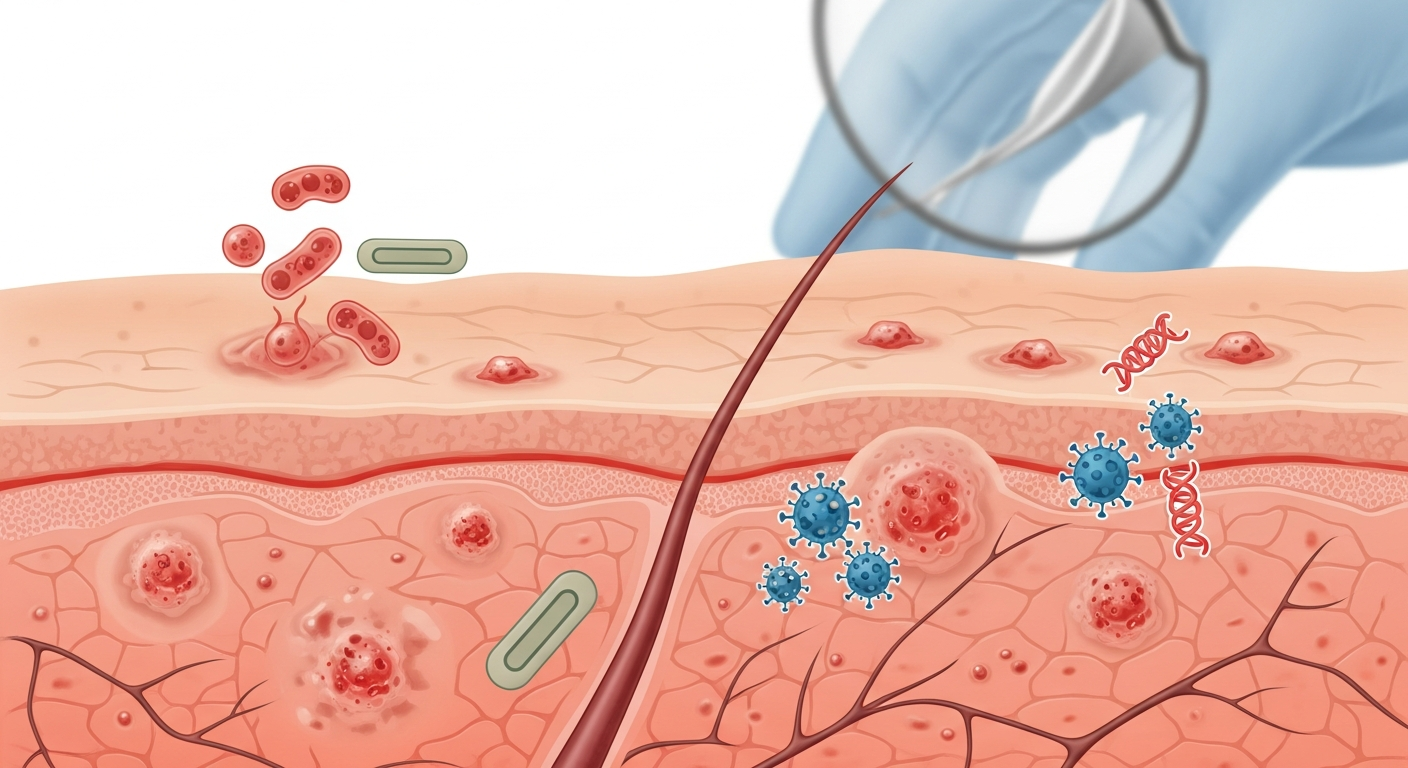
The toddler years (ages 1–3) represent one of the most rash-prone periods of childhood. As toddlers begin attending daycare and nursery, they encounter a large number of new viruses for the first time — and first viral infections almost always produce a skin rash (viral exanthem) as the immune system mounts its initial response. Roseola (HHV-6), hand-foot-and-mouth disease (coxsackievirus), fifth disease (parvovirus B19), and various enteroviral rashes are all extremely common in this age group. The toddler immune system is actively developing — more capable than the infant immune system but still acquiring new immunological memories with every new infection. This rapid immune education is associated with frequent febrile illnesses with accompanying rashes. Beyond viral rashes, toddlers are prone to impetigo (highly contagious bacterial rash spreading rapidly in daycare settings), molluscum contagiosum (viral skin lumps spreading through skin contact), and ongoing atopic eczema. The key parental skill is differentiating the common benign viral rash (no treatment needed, self-limiting) from the occasional rash requiring medical attention. This guide covers each major toddler rash with distinguishing features, fever associations, transmission information, and treatment protocols.
Quick Medical Summary
Most Common Toddler Rashes and Their Viral Causes
Roseola infantum (sixth disease, exanthem subitum) is one of the most characteristic toddler rashes. Caused by human herpesvirus 6 (HHV-6), it follows a stereotyped pattern: 3–5 days of high fever (up to 40°C / 104°F) with no rash; then — as the fever breaks abruptly — a rose-pink, blanching rash appears on the trunk and spreads to the neck, face, and arms, typically lasting 1–3 days before fading. The fever-first, rash-after sequence is diagnostic. The child typically appears well once the fever resolves. Febrile seizures during the high fever phase are the most common complication, occurring in 10–15% of cases. Hand-foot-and-mouth disease (HFMD), caused by coxsackievirus A16 or enterovirus 71, produces a characteristic combination of painful sores in the mouth (ulcers on the tongue, soft palate, and inside the cheeks) and a distinctive rash on the palms of the hands and soles of the feet — flat-topped, oval or elongated papules and vesicles, often with a surrounding red halo. The rash may also appear on the buttocks, knees, and elbows. It spreads readily through saliva, stool, and blister fluid in daycare settings. Fifth disease (erythema infectiosum), caused by parvovirus B19, produces the dramatic 'slapped cheek' appearance — intensely red, warm cheeks that look as if the child has been slapped — followed days later by a lacy, net-like pink rash on the upper arms and thighs that waxes and wanes for 2–4 weeks with heat and sun exposure. The rash appears when the child is no longer infectious, so isolation is not necessary once the rash develops.
Impetigo, Molluscum, and Eczema in Toddlers
Impetigo is the most common bacterial skin infection in toddlers and young children, spreading rapidly through daycare and nursery settings via direct contact. Caused by Staphylococcus aureus or Streptococcus pyogenes, it produces honey-colored (golden-yellow) crusted sores, most commonly around the nose and mouth, but spreading to any area that is scratched or touched. Bullous impetigo (Staph-only form) produces large, fragile blisters filled with clear or cloudy fluid. Treatment: topical mupirocin 2% ointment for localized impetigo (3 times daily for 7 days); oral antibiotics (amoxicillin-clavulanate or cephalexin) for widespread or bullous impetigo. Exclude from daycare until lesions are crusted or 24 hours after antibiotics are started. Molluscum contagiosum is a poxvirus infection that causes multiple small (2–5mm), flesh-colored, dome-shaped papules with a characteristic central dimple (umbilication), most commonly on the trunk, face, arms, and in skin folds. It is spread by direct skin contact and within the same child by scratching (autoinoculation). Each lesion lasts several months, but the overall infection is self-limiting — resolving over 1–2 years without treatment in immunocompetent children. No treatment is required; however, if lesions are spreading rapidly or causing distress, a dermatologist can consider cryotherapy, podophyllotoxin, or cantharidin application. Atopic eczema in toddlers frequently transitions from the infant cheek-and-trunk distribution to the characteristic flexural distribution: inner elbows, behind the knees, wrists, and ankles. The skin in these creases becomes lichenified (thickened, leathery) from chronic scratching. Regular emollient use and topical steroids for flares remain the mainstay of management.
Toddler Immune System: Why Rashes Are So Frequent
Between ages 1 and 3, the toddler immune system undergoes one of its most active phases of development. Maternal antibody protection (transferred in utero and through breast milk) has largely waned by 6–12 months, requiring the child's own immune system to respond to infections independently. Entry into daycare represents an immunological stress test: children typically experience 8–12 viral upper respiratory infections per year in the first years of daycare, each potentially accompanied by a rash. The T-helper 2 (Th2)-skewed immune response of young children — which favors allergic-type immune responses over cellular (Th1) responses — is normal in this developmental phase but explains why toddlers develop allergic conditions (eczema, hay fever, food allergy) more readily than adults. The Th2-to-Th1 shift that occurs through microbial exposure and immunological memory accumulation explains why eczema tends to improve as children age and their immune systems mature. Vaccination is an important part of preventing rash-associated infections in toddlers: the MMR vaccine (measles, mumps, rubella) prevents measles and rubella rashes; the varicella vaccine reduces the risk of chickenpox dramatically; and other scheduled vaccines protect against bacterial infections that cause serious rash-associated diseases (meningococcal, Haemophilus influenzae). A vaccinated toddler who develops a viral rash is almost always experiencing a benign, self-limiting, non-vaccine-preventable viral infection rather than a serious vaccine-preventable illness.
Prevention and When to See a Doctor for Toddler Rashes
Most toddler rashes are benign and self-limiting. The following situations warrant same-day or emergency medical evaluation. Non-blanching rash anywhere on the body — particularly with fever, extreme lethargy, or neck stiffness — is a potential meningococcal emergency: call emergency services. Blistering rash in a toddler with fever and extreme pain may indicate severe impetigo (bullous), staphylococcal scalded skin syndrome (SSSS), or herpes simplex encephalitis — all requiring urgent evaluation. Widespread urticaria (hives) with facial swelling or breathing difficulty indicates anaphylaxis — use epinephrine if prescribed and call emergency services. Rash with joint swelling, particularly of the ankles and knees in a toddler, may indicate reactive arthritis post-infection or early juvenile arthritis. Rash appearing in a toddler after starting a new antibiotic or other medication requires same-day evaluation to exclude Stevens-Johnson Syndrome (blistering with mucosal involvement) which, though rare, is a medical emergency. Prevention strategies: thorough and frequent handwashing is the most effective measure against daycare-transmitted viral and bacterial rashes; teach toddlers not to share cups, utensils, or towels; maintain regular emollient use for eczema-prone toddlers; complete the scheduled immunization programme; for molluscum, cover lesions in swimming pools and shared baths; for impetigo, exclude from daycare until non-infectious and cover lesions in the interim. For broader prevention strategies, see the full skin rash prevention guide. For visual identification of toddler rashes, use the rash pictures photo guide.
Key Symptoms
- High fever 3–5 days then rose-pink trunk rash when fever breaks (roseola)
- Red 'slapped cheeks' then lacy arm/thigh rash (fifth disease)
- Mouth ulcers + oval papules on palms and soles (hand-foot-mouth)
- Honey-colored crusted sores around nose and mouth (impetigo)
- Flesh-colored dome-shaped papules with central dimple (molluscum contagiosum)
- Itchy lichenified rash in inner elbows and behind knees (atopic eczema)
- Widespread pink spots on trunk with fever (viral exanthem)
- Non-blanching rash with fever and lethargy (emergency — meningococcal)
Treatment Options
- Roseola, fifth disease, viral exanthems: supportive care — antipyretics, fluids
- Hand-foot-mouth: supportive; salt water mouth rinses; analgesics for pain
- Impetigo (localized): topical mupirocin 3× daily for 7 days
- Impetigo (widespread/bullous): oral antibiotics; exclude from daycare 24h
- Molluscum contagiosum: watchful waiting; cryotherapy for extensive cases
- Eczema: daily emollient; topical hydrocortisone for flares
- Anaphylaxis: epinephrine auto-injector; call emergency services
- Meningococcal suspected: call 999/911 immediately
| Condition | Fever Pattern | Rash Location | Contagious After Rash? |
|---|---|---|---|
| Roseola (HHV-6) | High fever 3–5 days, then rash when fever breaks | Trunk, then face/arms | Less so once rash appears |
| Fifth Disease (Parvovirus B19) | Mild fever before rash | Slapped cheeks, then lacy arm/thigh | No — not contagious once rash visible |
| Hand-Foot-Mouth (Coxsackievirus) | Mild fever, mouth sores first | Palms, soles, buttocks | Yes — several days after rash |
| Chickenpox (Varicella) | Mild fever simultaneous with rash | Trunk spreading everywhere; all blister stages | Yes — until all lesions crusted |
| Impetigo | Usually no fever (unless extensive) | Face, especially nose/mouth area | Yes — until treated 24h or lesions crusted |
Further Reading by Age Group
When to See a Doctor Immediately
- Difficulty breathing or swallowing
- Swelling of the face, lips, or tongue
- High fever or severe chills
- Rapid spreading over a large body surface area
- Extreme pain, dizziness, or confusion
Frequently Asked Questions
Disclaimer
The medical information provided in this article is for educational purposes only and should not replace professional medical advice, diagnosis, or treatment. Always consult with a board-certified dermatologist or primary care physician regarding any severe or persistent skin conditions.