Baby Rashes: Complete Guide for Newborns and Infants
Medically Reviewed By
Dr. Marcus Chen, FAAD
Last Updated
March 11, 2026
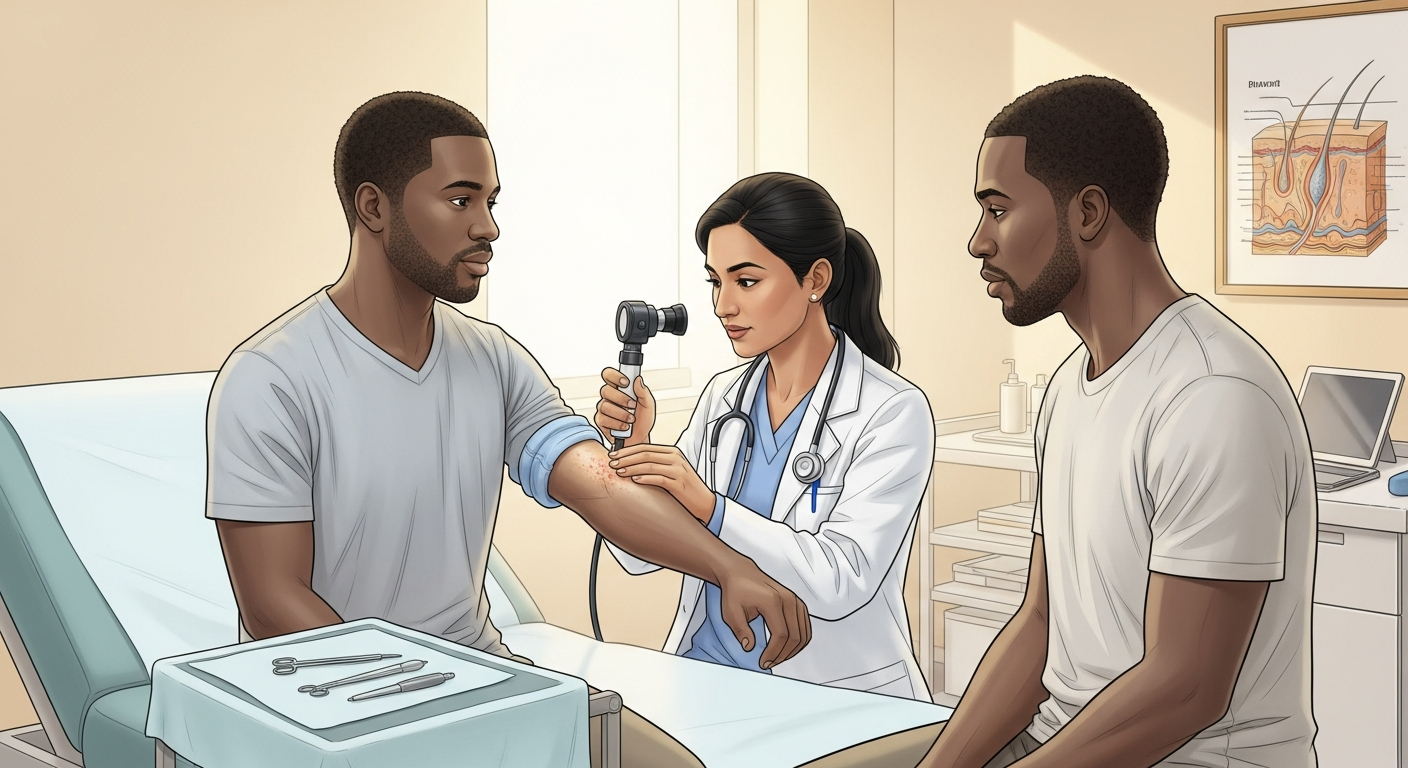
Baby skin is fundamentally different from adult skin — it is thinner, absorbs topical substances more readily, loses moisture faster, and has an immature immune system with a still-developing skin microbiome. This combination makes newborns and infants particularly prone to a unique set of rashes that rarely affect older children or adults, while also predisposing them to more severe reactions to environmental triggers. Fortunately, the vast majority of baby rashes in the first year of life are benign, self-limiting conditions requiring little or no treatment. The most common baby rashes include erythema toxicum neonatorum (a completely benign rash affecting up to 70% of newborns), milia (white pinhead spots), neonatal acne, cradle cap (seborrheic dermatitis), diaper rash (irritant contact dermatitis from urine and stool), and atopic eczema (which most commonly first appears between 2 and 6 months of age). Understanding which rashes are normal versus which require medical evaluation is the central skill every parent and caregiver needs. This guide covers each major baby rash with identifying features, age of appearance, immune system context, prevention tips, and evidence-based treatment — with comparison tables and internal links to our specialist diagnosis, symptoms, and prevention pages.
Quick Medical Summary
Common Baby Rashes: Benign Conditions That Worry Parents
Erythema toxicum neonatorum (ETN) is the most common newborn rash, appearing in up to 70% of full-term babies between day 2 and day 5 of life. It produces blotchy red areas, each with a central yellowish-white pustule resembling an insect bite, spread across the trunk, arms, and face — but characteristically sparing the palms and soles. Despite its alarming appearance, ETN is completely benign — the result of the immune system's first encounter with environmental microorganisms. It resolves spontaneously within 5–7 days without any treatment. Milia are tiny (1–2mm) white or yellow pinhead-sized cysts on the nose, cheeks, chin, and forehead of newborns, caused by trapped keratin in immature hair follicles. They are present in up to 50% of newborns, require no treatment, and resolve within 4–6 weeks. Neonatal acne (neonatal cephalic pustulosis) affects approximately 20% of newborns, appearing between 2 and 4 weeks of age as small red papules and pustules on the cheeks, chin, and forehead — triggered by maternal androgens passed through the placenta. It resolves spontaneously within 3 months without treatment; cleansing with water and mild soap is all that is needed. Cradle cap (infantile seborrheic dermatitis) appears between 3 weeks and 3 months of age as thick, yellowish, greasy scales on the scalp, eyebrows, and ear folds — an inflammatory response to Malassezia yeast. It is not itchy or distressing to the baby. Gentle loosening with baby oil or coconut oil followed by washing with a mild baby shampoo resolves most cases within weeks.
Diaper Rash and Atopic Eczema in Infants
Diaper rash (irritant diaper dermatitis) is the most common skin condition in infancy, affecting up to 35% of infants at any given time. It is caused by prolonged contact of skin with urine and stool — enzymes in stool (particularly from diarrhea) macerate and break down the skin barrier, while ammonia from urine adds further irritation. Classic appearance: redness affecting the diaper area, including the genitals, inner thighs, and buttocks, but characteristically sparing the deep skin folds (which are protected from direct contact with soiled diaper). Treatment: change diapers frequently (at least every 2–3 hours and immediately after soiling); apply a thick barrier cream (zinc oxide 40% paste or petroleum jelly) at each change to protect the skin; allow skin-to-air time where safe. If the rash involves the skin folds with satellite pustules, Candida superinfection has occurred — add topical clotrimazole. Atopic eczema (atopic dermatitis) first appears in 60% of affected children within the first year of life. In infants, it characteristically presents on the cheeks (symmetric red, rough, scaly patches), scalp, and trunk. The diaper area is usually spared (moisture paradoxically protects this area). Eczema in infants is identified by its chronic, relapsing nature; intense itchiness (the baby rubs their face against bedding); association with family history of eczema, asthma, or hay fever; and improvement with emollient therapy. The NICE guidelines recommend starting regular emollient therapy immediately upon diagnosis — apply a fragrance-free thick emollient (such as Doublebase gel or Aveeno baby cream) at least twice daily. Topical corticosteroids (hydrocortisone 0.5–1% in infants) are reserved for flares. Emollient use from birth in high-risk infants may reduce the risk of developing eczema by up to 50%.
The Baby Immune System and Why Rashes Are Common
The neonatal immune system is profoundly immature at birth and undergoes rapid development in the first months of life. The innate immune system (the first-line defense of barriers and inflammation) is functional but relatively unregulated, leading to exuberant inflammatory responses to routine microbial colonization — which explains conditions like erythema toxicum and neonatal acne. The adaptive immune system (T and B cells producing targeted antibody responses) is essentially naive at birth, relying on maternal antibodies (IgG transferred through the placenta and IgA through breast milk) for early protection. This maternal antibody protection declines over the first 6 months, creating a period of relative immunological vulnerability — the timing when vaccines are most critical. The skin microbiome — the community of bacteria, fungi, and viruses that colonizes the skin surface and plays a crucial role in skin barrier function and immune education — is established rapidly in the first weeks of life but takes 1–3 years to reach adult-like stability. Disruption of the early skin microbiome (by antibiotic use, caesarean delivery, or aggressive cleansing) is associated with increased risk of atopic eczema. Breast milk contains immune-active components including secretory IgA (protecting gut and skin mucosal surfaces), cytokines, and bioactive fatty acids that support immune development and skin barrier function. The relationship between early colonization with microorganisms and subsequent immune tolerance ('hygiene hypothesis') explains why excessive early cleansing, sterilizing of environments, and antibiotic use correlate with higher rates of allergic skin conditions including eczema in children.
When to See a Doctor: Serious Baby Rashes and Prevention Tips
While most baby rashes are benign, certain presentations require immediate medical evaluation. Non-blanching rash (stays visible when pressed with a glass) in a baby — especially with fever or lethargy — is a medical emergency: call emergency services immediately. Any rash in a newborn under 4 weeks with fever (rectal temperature above 38°C / 100.4°F) requires same-day emergency evaluation, as young infants can develop serious bacterial infections from organisms that would be easily cleared by an older child. Blistering rash in a neonate (newborn) may indicate neonatal herpes simplex virus (HSV) infection — a dangerous condition acquired during vaginal delivery from an active maternal herpes infection. HSV in the neonate can be life-threatening and disseminate to the brain and internal organs; it requires urgent IV antiviral treatment. Widespread rash with crusting, weeping, and fever in a young infant may indicate staphylococcal scalded skin syndrome (SSSS) — the staphylococcal toxin causes massive skin peeling as if the skin has been burned, requiring IV antibiotics. Prevention tips for baby rashes: apply fragrance-free emollient to high-risk (atopic family history) babies from the first week of life; use fragrance-free, pH-balanced baby cleansers rather than harsh soaps; change diapers immediately after soiling and use zinc oxide paste barrier cream; avoid introducing potential allergens to eczema-prone skin (fragrances, bubble baths, perfumed wipes); see our prevention guide for additional evidence-based strategies. For visual comparison of common baby rash types, see the rash pictures photo guide. For formal diagnosis guidance, read how doctors diagnose skin rashes.
Key Symptoms
- Red blotchy rash with central white pustule, sparing palms/soles (erythema toxicum — day 2–5)
- Tiny white pinhead spots on nose, cheeks, and chin (milia — newborn)
- Red papules and pustules on cheeks and chin (neonatal acne — weeks 2–4)
- Thick yellowish scale on scalp and eyebrows (cradle cap/seborrheic dermatitis)
- Redness on diaper area sparing deep folds (irritant diaper rash)
- Red rash in diaper folds with satellite pustules (Candida superinfection)
- Symmetric red, rough, itchy patches on cheeks (early atopic eczema)
- Blistering rash in neonate with lethargy or fever (neonatal HSV — emergency)
Treatment Options
- Erythema toxicum and milia: no treatment — self-resolve in 1–6 weeks
- Neonatal acne: gentle cleansing with water; no topical treatments needed
- Cradle cap: baby oil or coconut oil to loosen scales; mild baby shampoo
- Diaper rash: frequent changes; zinc oxide paste at every change; air time
- Candidal diaper rash: topical clotrimazole + zinc oxide paste
- Infant eczema: fragrance-free emollient 2× daily; hydrocortisone 0.5% for flares
- Neonatal herpes: immediate IV aciclovir — do not delay (life-threatening)
- SSSS: hospitalization; IV antibiotics; wound care
| Condition | Age of Onset | Appearance | Treatment Needed? |
|---|---|---|---|
| Erythema Toxicum | Day 2–5 of life | Blotchy red + white pustule, spares palms/soles | None — resolves in 5–7 days |
| Milia | Birth to week 2 | Tiny white/yellow pinhead spots on face | None — resolves in 4–6 weeks |
| Neonatal Acne | Weeks 2–4 | Red papules/pustules on cheeks and chin | Gentle cleansing only |
| Cradle Cap | 3 weeks–3 months | Thick yellow-brown scale on scalp | Baby oil + mild shampoo |
| Irritant Diaper Rash | Any age from birth | Red skin, spares folds, in diaper area | Zinc oxide paste; frequent changes |
| Infant Eczema | 2–6 months | Itchy red scaly patches on cheeks, trunk | Emollient daily; steroid for flares |
Further Reading by Age Group
When to See a Doctor Immediately
- Difficulty breathing or swallowing
- Swelling of the face, lips, or tongue
- High fever or severe chills
- Rapid spreading over a large body surface area
- Extreme pain, dizziness, or confusion
Frequently Asked Questions
Disclaimer
The medical information provided in this article is for educational purposes only and should not replace professional medical advice, diagnosis, or treatment. Always consult with a board-certified dermatologist or primary care physician regarding any severe or persistent skin conditions.